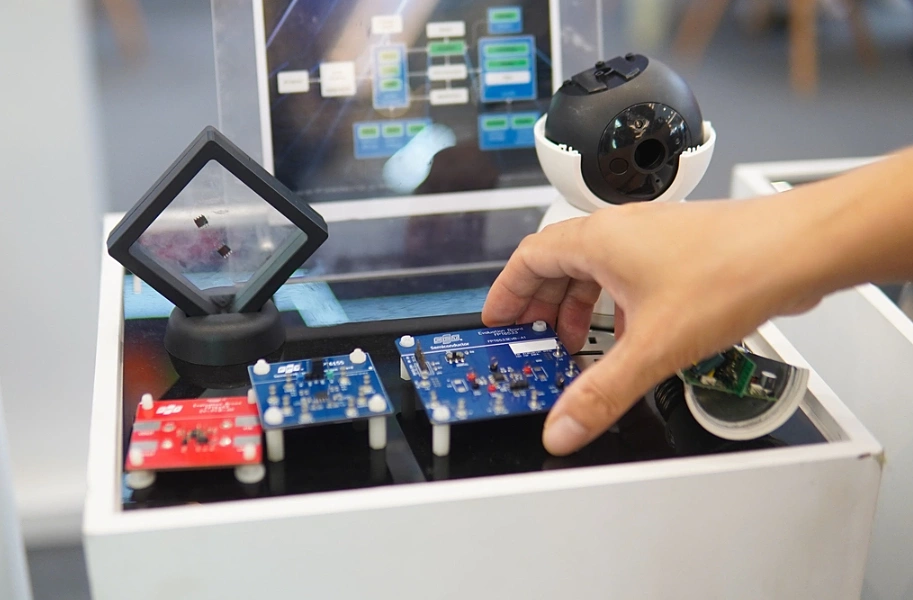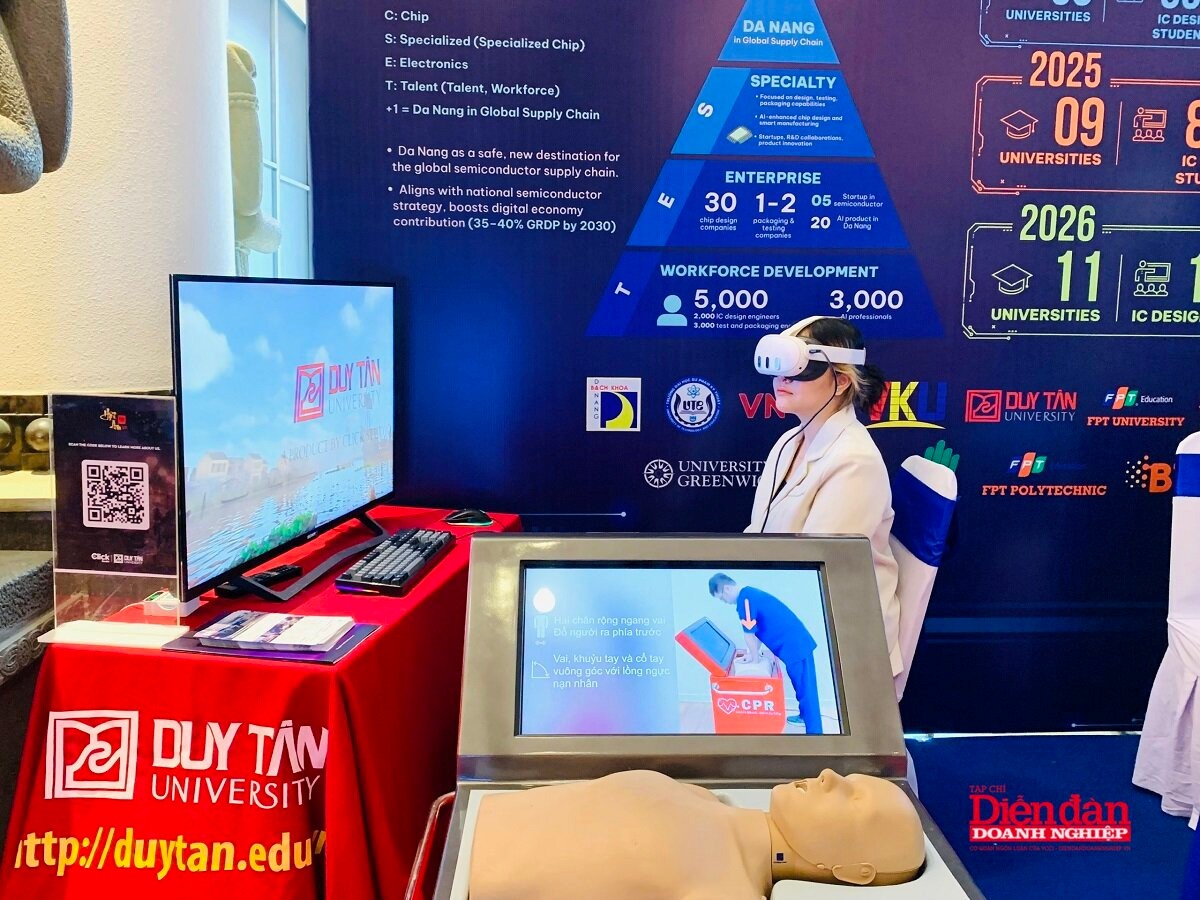


As competition increasingly depends on productivity, quality and technological content, technological innovation is no longer a long-term option but has become an urgent requirement for businesses.
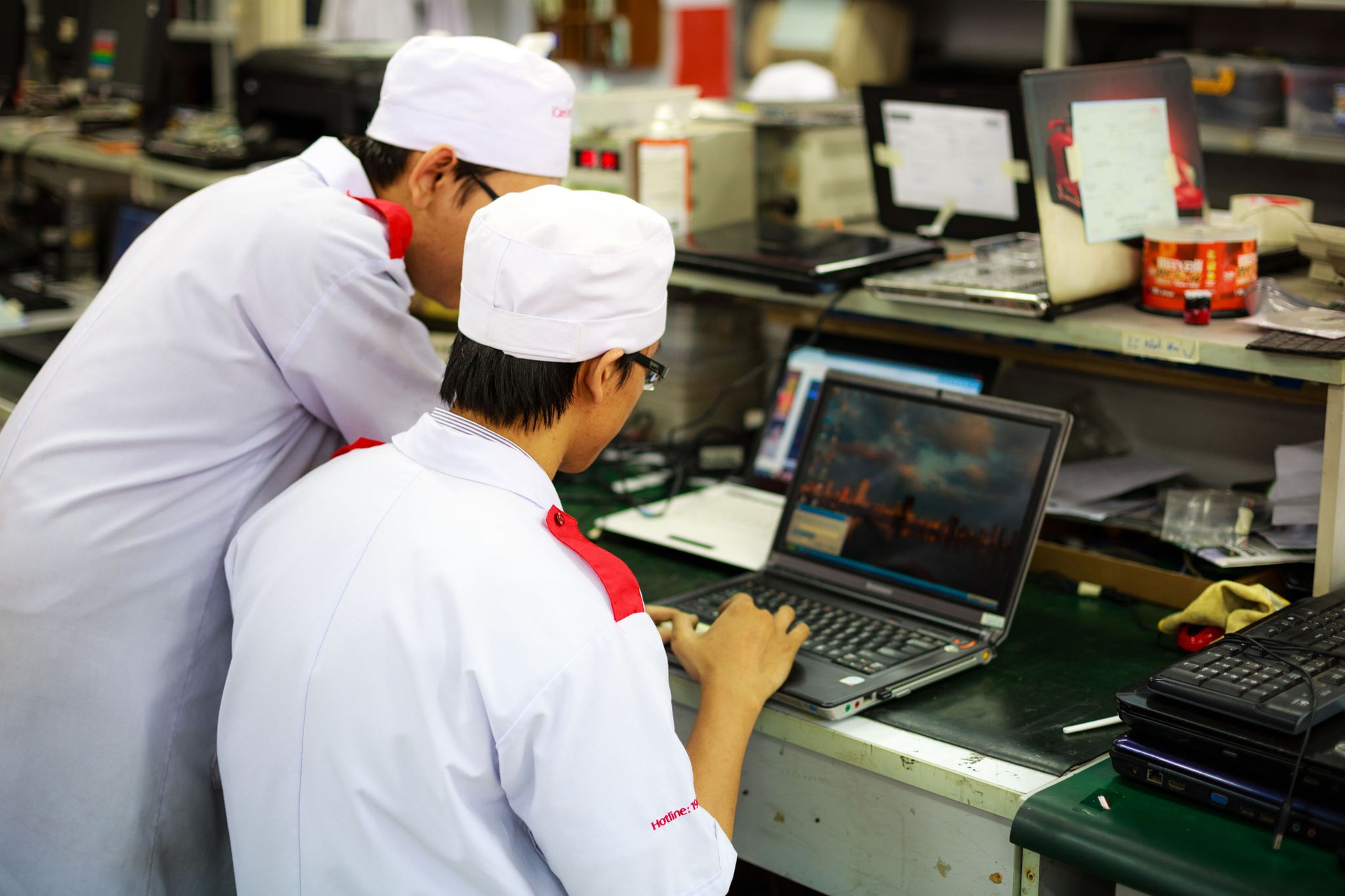
their technological capabilities. Illustration: Pexels
Addressing Financing Bottlenecks in Technology Investment
However, technology investment often requires substantial capital, involves long payback periods and carries potential risks in terms of operational efficiency. Many businesses want to modernize production lines, automate manufacturing and adopt digital technologies, but must carefully consider capital costs, access to credit and their own financial capacity.
This is also one of the issues highlighted by the Organisation for Economic Co-operation and Development (OECD) in its 2025 Economic Survey of Viet Nam. According to the organization, Viet Nam's spending on research and development (R&D) increased from 0.15% of GDP in 2011 to 0.43% in 2021, but remained below the average for lower-middle-income countries. Notably, most private enterprises, predominantly small and medium-sized enterprises (SMEs), still face financial constraints that limit their ability to invest in R&D.
According to Assoc. Prof. Dr. Vu Sy Cuong of the Academy of Finance, current investment levels amount to only around one-quarter of the target set. The biggest barriers include complicated administrative procedures, slow disbursement of science and technology funds, a shortage of highly skilled personnel and, particularly, a reluctance to take risks due to fears of being held accountable for research activities.
Against this backdrop, NATIF's implementation of an interest rate subsidy scheme for businesses investing in technology transfer, application and innovation opens up another noteworthy avenue of support.
According to NATIF's announcement, businesses with eligible investment projects or plans may be considered for a subsidy covering 50% of the loan interest under their credit agreements, up to a maximum of 6% per year. The subsidy period can extend to five years, starting from the date of the Fund's approval until the business fulfills its debt repayment obligations, subject to the prescribed conditions.
The scope of support is relatively broad, covering the purchase of machinery, equipment and production lines; the acquisition of rights to use or own technologies through technology transfer; the hiring of consulting experts; pilot production and the completion of technological processes; as well as workforce training, testing, inspection and product quality assessment.
Notably, the policy is not limited to helping businesses purchase equipment but also covers various stages of the technology innovation process. This is significant because a modern production line can only deliver its full benefits when integrated with appropriate operating processes, a sufficiently skilled workforce and a corresponding quality control system.
Strengthening Competitiveness
For manufacturing businesses, the application of automation technologies can help reduce dependence on manual labor, minimize errors and improve product consistency. In agricultural processing, technologies for preservation, drying, sorting and quality control can extend storage periods, reduce post-harvest losses and increase the value of goods.
For supporting industry enterprises, investment in technology is also a prerequisite for meeting the technical requirements and quality standards of multinational corporations, thereby expanding opportunities to participate in supply networks.
Assoc. Prof. Dr. Vu Sy Cuong believes that when R&D becomes a driving force in both the public and private sectors, Viet Nam will have a solid foundation for improving productivity, strengthening competitiveness and realizing its goal of becoming a developed, high-income country by 2045.
From this perspective, the interest rate subsidy policy not only helps ease immediate financial pressure but also contributes to promoting a shift in the growth model away from heavy reliance on capital, labor and contract manufacturing towards one driven by productivity, technology and added value.
Notably, under its priorities for the second approval round of 2026, NATIF gives priority to SMEs and projects involving strategic technologies, high technologies and technologies included in the list of those encouraged for transfer. Projects capable of generating an increase in added value of 7% or more are also given priority for consideration.
However, it should also be recognized that businesses facing financial difficulties, lacking collateral or having a poor credit history are often precisely those with the greatest need for technology support. If credit access requirements become an excessively significant barrier, some businesses with genuine innovation needs may find it difficult to access the policy.
Therefore, alongside interest rate subsidies, it is necessary to strengthen advisory services and connections among the Fund, banks, industry associations, research institutes and businesses. Helping businesses assess their current technological capabilities, develop investment plans, determine economic efficiency and complete application dossiers will contribute to improving their ability to access the policy.
(Source: Business Forum Magazine)