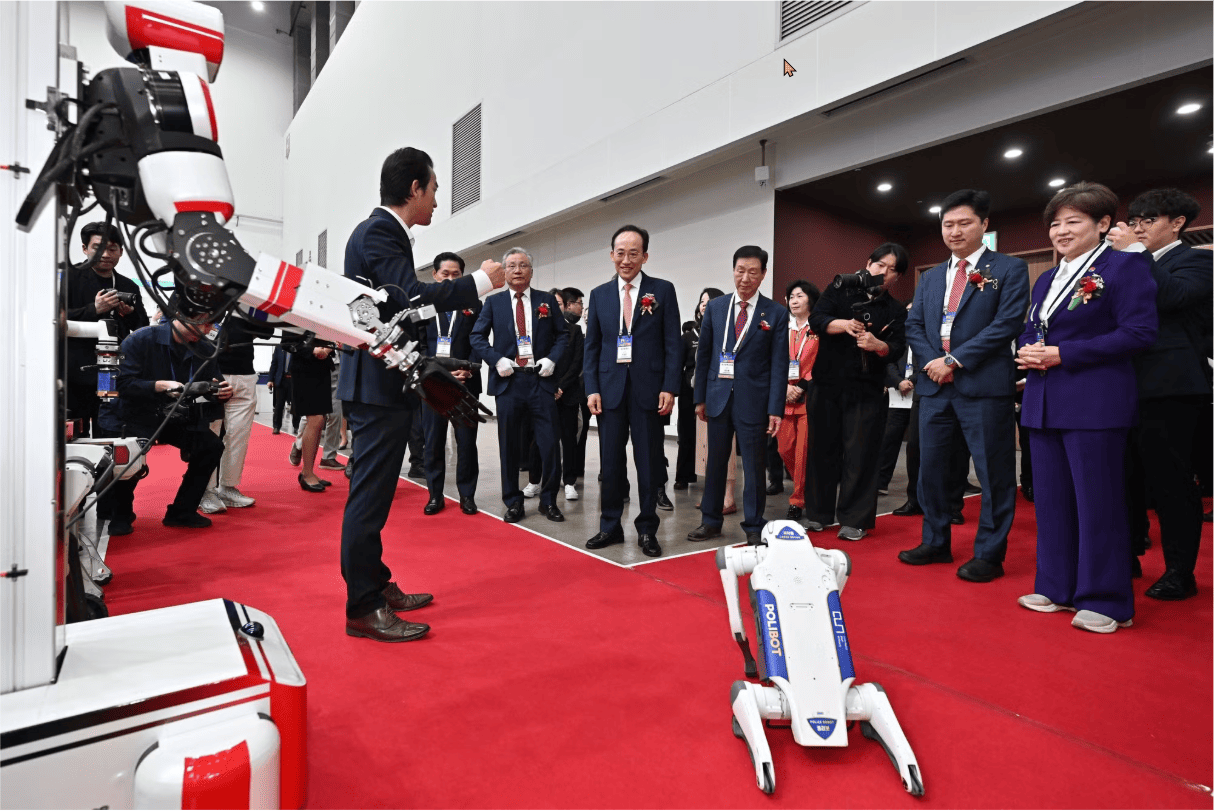


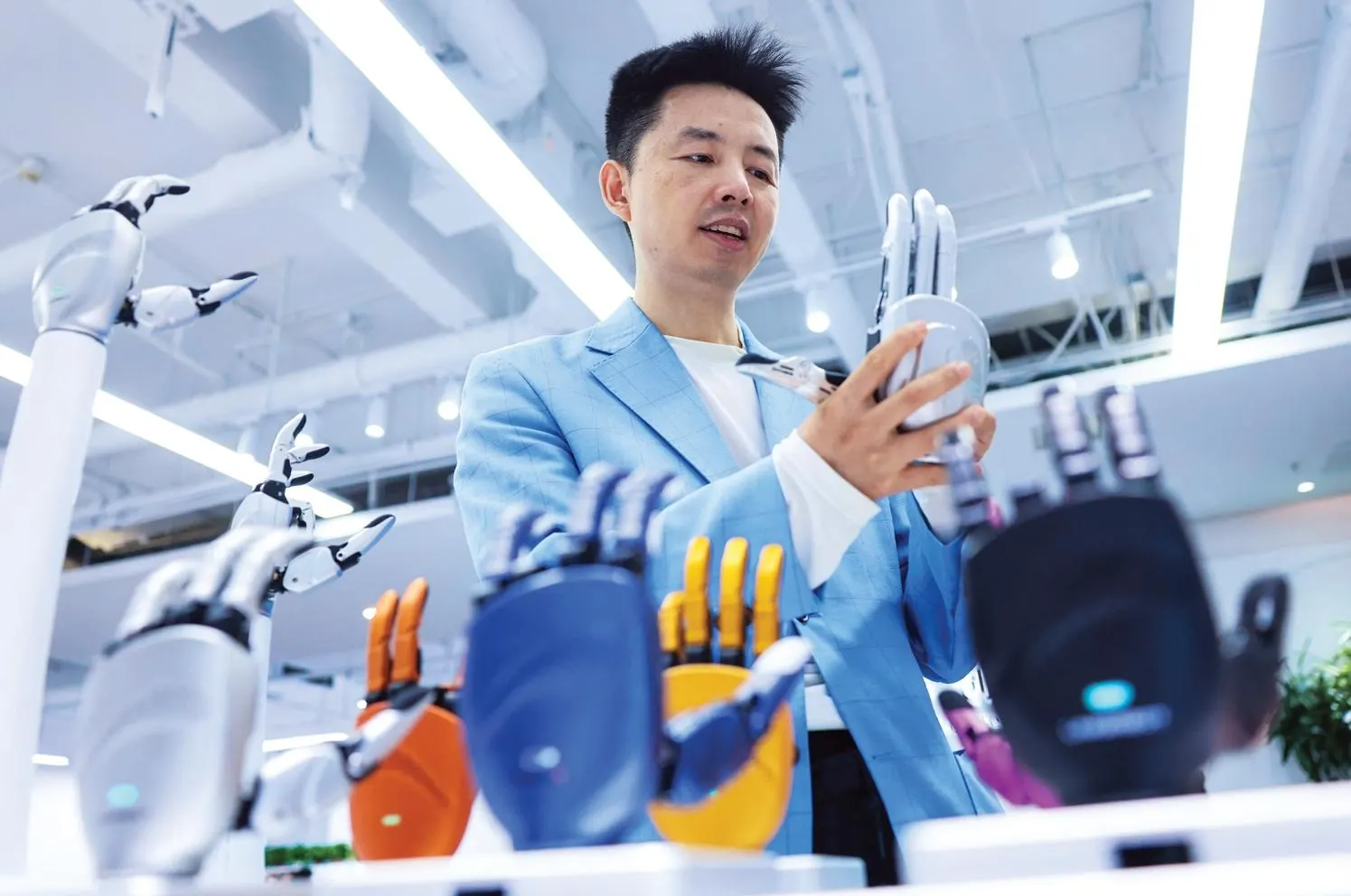
At Linkerbot’s headquarters in Beijing, China, the showroom doubles as a reception area. Half of the space is devoted to rows of robotic hands developed by the company. Some are mounted on robotic arms, demonstrating how to drive screws into pre-drilled holes. Others are fitted to four life-sized humanoid robots dressed in traditional red mamian skirts, playing keyboards and drums, including “Prelude to the Spring Festival,” a composition by Chinese musician Li Huanzhi.

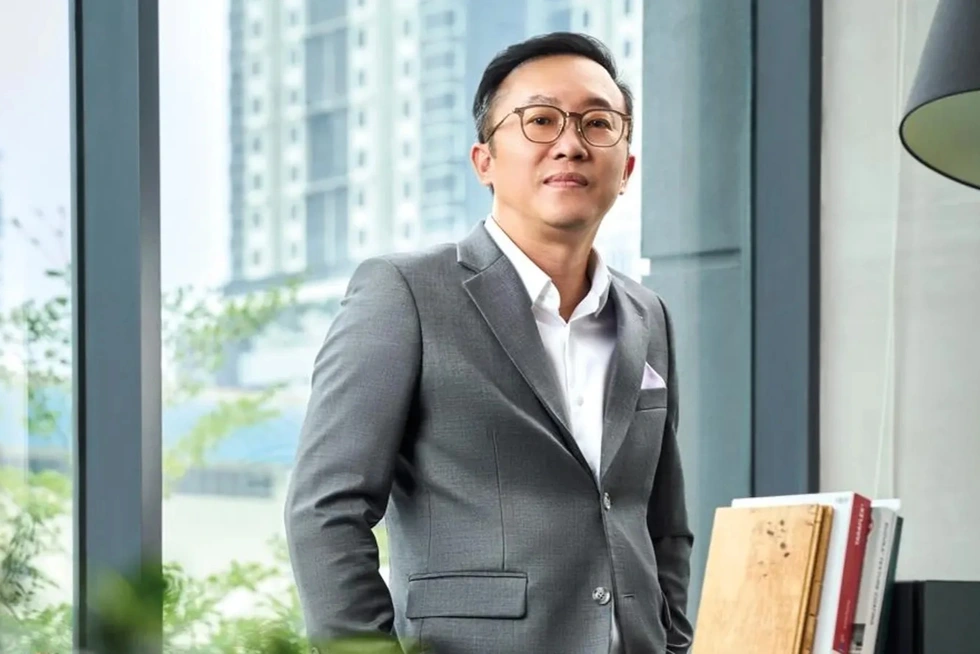
Linkerbot was co-founded in 2023 by Alex Zhou, who now serves as its chairman and CEO. Last year, the company made its debut on Forbes Asia’s list of 100 notable companies, which recognizes promising small businesses and emerging startups across the Asia-Pacific region. Linkerbot’s flagship products are dexterous, five-fingered robotic hands, among the most important components of humanoid and industrial robots. They enable robots to perform a wide range of tasks, from simple, repetitive operations to highly complex assignments.
According to Zhou, the company’s products are already being used in Chinese factories to pick up objects and assemble components. His next goal is to teach them to cook, clean and do household chores, turning humanoid robots into truly indispensable domestic helpers.
“Our mission is to give robotic hands the skills of a master craftsman,” says the 40-year-old entrepreneur. “We don’t want to create a robotic hand that can perform only a handful of specific operations. We want a hand that can do everything a human hand can do.”
Replicating the human hand is one of the most challenging problems in robotics. A real hand can control extremely delicate movements, flexibly adjust its grip and sense the force of physical contact. At the All-In Summit in Los Angeles last September, billionaire Elon Musk acknowledged that Tesla’s Optimus humanoid robot had become fairly good at walking, but developing human-like hands, from the hardware that enables movement to the software that controls it, remained far more difficult.
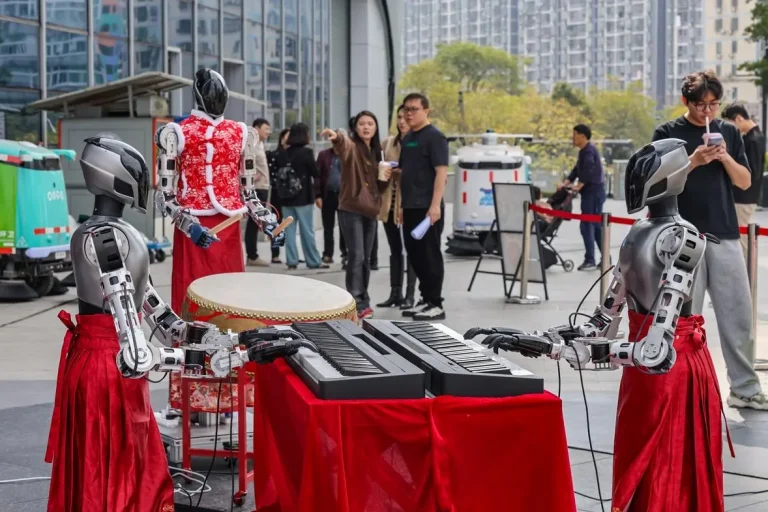
Photo: Getty Images
Zhou understands that the technological gap remains. However, he believes that combining artificial intelligence (AI) with China’s manufacturing capabilities will help Linkerbot narrow it. The company is building a database of hand-manipulation skills while expanding production to lower costs. These efforts could give it a competitive advantage in an already crowded market, both in China and abroad.
According to TF Securities, a brokerage firm based in Wuhan, China had more than 24 robotic hand manufacturers as of 2025. The Gaogong Industrial Institute in Shenzhen forecasts that robotic hand shipments in China will reach 70,000 units by the end of this year, an increase of nearly 300% from 2025, before exceeding 430,000 units annually by 2030, or more than six times the current level.
Investment is also flowing into the sector. Backed by Ant Group, HSG and CICC Capital, Linkerbot completed its Series B+ funding round in April at a valuation of $3 billion, according to the company. Zhou owns a 31% stake, equivalent to an estimated fortune of $920 million. He has launched a new fundraising round targeting a $6 billion valuation, a level that could put him among the ranks of billionaires. Some media reports have said that Linkerbot plans to list in Hong Kong, China, in 2027, but a company representative said there was no definite timeline for an initial public offering (IPO).
Linkerbot currently offers six robotic hand models, priced from 6,666 to 99,999 yuan ($980–$14,700). Its least expensive model, the O6, can curl all five fingers to grip relatively large objects, such as smartphones. At the other end of the range, the most expensive model, the L30, has independently moving finger joints and fingers, with enough precision to use tweezers to pick up tiny screws. Its best-selling model is the L20, priced at 49,999 yuan. Although one level below the L30 in terms of dexterity, it can still grip objects the size of a cup, tighten bolts and open bottle caps.
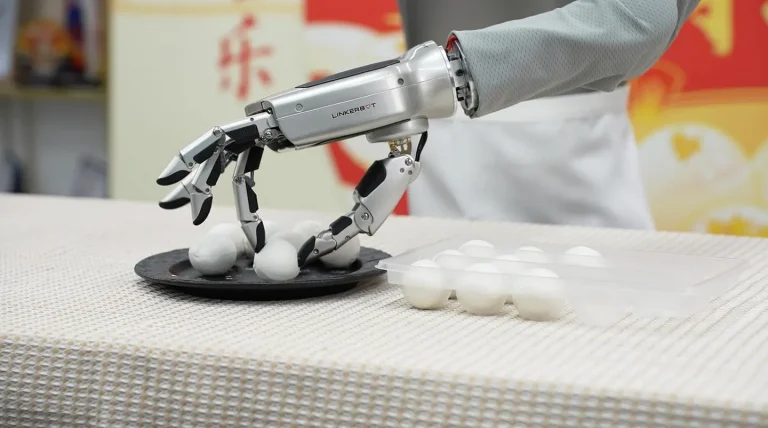
Tasks that sound quite ordinary actually require sophisticated engineering. Dermot McGrath, founder of Shanghai-based consultancy ZenGen Labs, says robotic hands are typically operated by small motors and specialized tendon-driven transmission systems. Sensors at the fingertips allow them to “feel” the objects they touch. Even tightening a screw requires multiple motors to work in coordination so that the hand does not grip too tightly or too loosely. To lift an egg without cracking its shell, a robot also needs a sufficiently sophisticated sensor system to apply just the right amount of gripping force.
In March, Sharpa, one of Linkerbot’s biggest competitors, based in Singapore, successfully trained its Wave robotic hand to peel an apple, an achievement regarded as a breakthrough in robotics. According to McGrath, compared with the Wave, Linkerbot’s most advanced L30 is less precise in adjusting applied force because it has fewer sensors. However, the two products offer comparable dexterity. As Linkerbot scales up, pricing could become its biggest competitive advantage.
Unlike most of its competitors, Linkerbot manufactures nearly all of its components in-house. This gives the company greater control over its supply chain and helps keep costs low. Based on prices reported by the media, each Wave hand costs $50,000, three times the price of the L30. Meanwhile, London-based Shadow Robot sells its top-of-the-line model, which can use tools such as wrenches, for 110,000 euros ($125,000) per unit.
“We don’t want to create a robotic hand that can perform only a handful of specific operations. We want a hand that can do everything a human hand can do.”
“Linkerbot is making some of the best and most affordable robotic hands that buyers can find,” McGrath says. “Making components in-house allows the company to control costs and improve its products more quickly.”
Zhou wants to bring prices down even further. A new production line that began operating in Beijing in August brought the company’s total number of factories in China to four. Linkerbot aims to increase its production capacity to as many as 100,000 hands annually over the next few years. According to Gaogong, the company ranked second in China last year in terms of robotic hand shipments, behind Beijing-based Inspire Robots.
Linkerbot believes that large-scale production could bring hardware costs down to below $100 per pair of hands within the next three years. According to Ming Hsun Lee, an analyst at BofA Global Research in Hong Kong, China, average global hardware costs currently stand at around $6,000 per pair, compared with $1,200 in China. He forecasts that costs will decline by approximately 15% annually as production volumes increase. The greater its output, the more bargaining power Linkerbot will have with raw material suppliers, generating further cost savings. Su Yang, the company’s co-founder in charge of AI and software, told Chinese media last year that as production scales up, Linkerbot could bring costs down to 500 yuan, or approximately $75, per pair of hands.
In addition to selling to humanoid robot manufacturers, Linkerbot also supplies products to numerous universities, including Stanford in California and Tsinghua University in Beijing, for research into new laboratory applications. According to Linkerbot, its overseas customers also include South Korea’s Samsung and Germany’s Siemens. The company declined to disclose its financial figures.
Facing the risk of labor shortages as its population ages rapidly, Chinese manufacturers are also incorporating Linkerbot’s hands into their assembly lines, Zhou says. For example, in July, Qianweiyangchu Food, a Shenzhen-listed food company, announced plans to use Linkerbot robotic hands on a new automated production line for frozen foods and ready-made meals.
However, domestic competitors are closing in. Shanghai-based AgiBot, founded in the same year as Linkerbot, sells its OmniHand model for $2,200 per unit, while Inspire Robots offers a basic model for $2,700. On e-commerce platform JD.com, dozens of brands advertise robotic hand models priced from $445 to $14,800, depending on their features and dexterity.
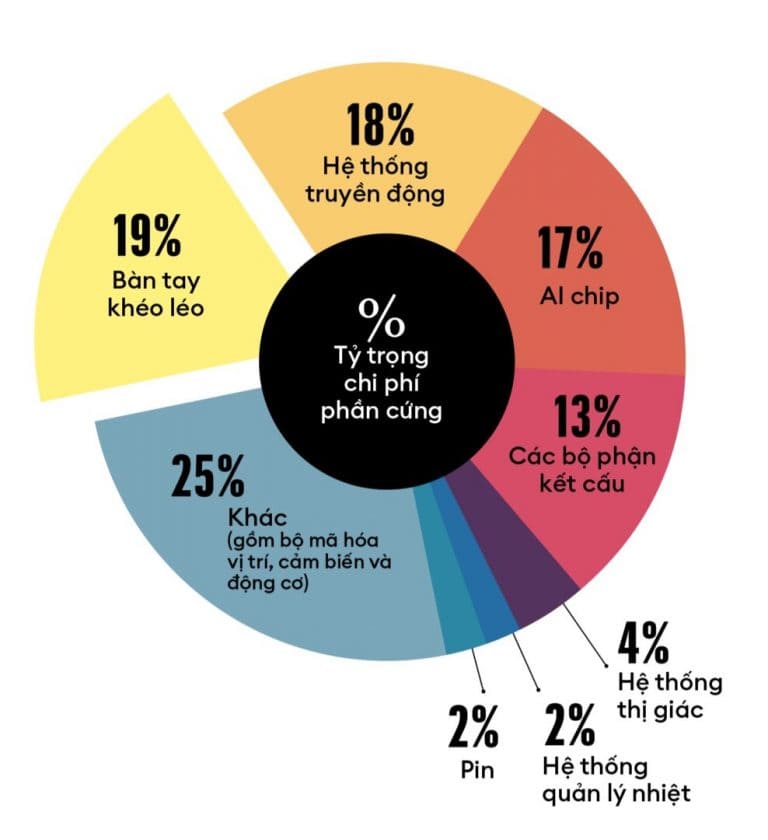
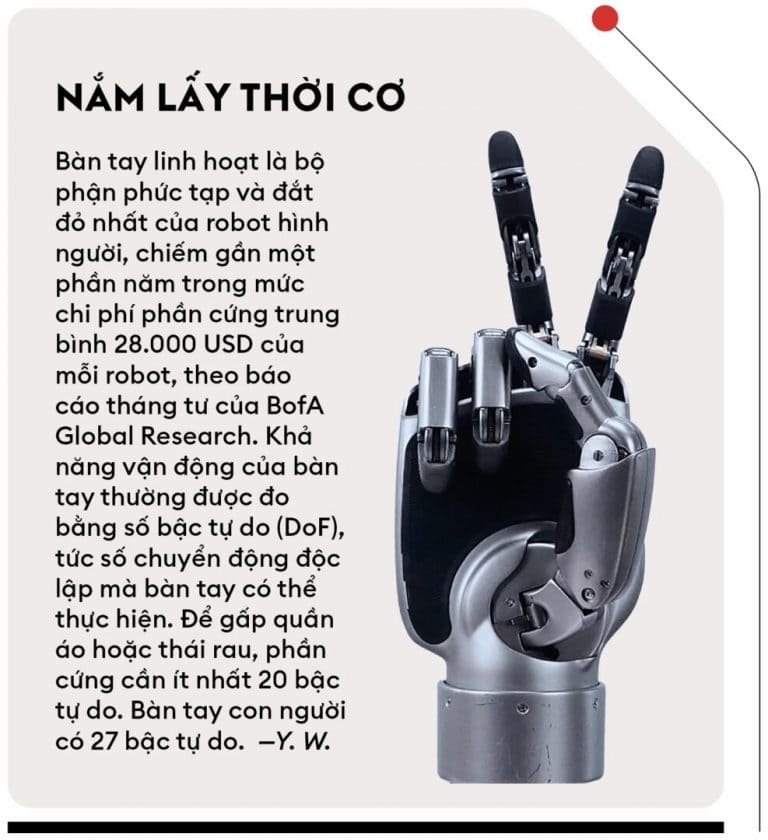
The Most Expensive Component
The robotic hand is the single most expensive component of a humanoid robot.
Kevin Lynch, a professor of mechanical engineering at Northwestern University in Chicago, has tested products from several Chinese manufacturers, including Robotera, Wuji Technology and Inspire Robots, as well as Sharpa, Shadow Robot and South Korea’s Wonik Robotics. He believes that none of them has truly outperformed the others. “Each model has its own strengths and weaknesses.”
According to McGrath of ZenGen Labs, in their efforts to gain market share, Chinese companies risk falling back into a familiar pattern of competition: driving prices down as close to rock bottom as possible. This phenomenon is known as “involution” (neijuan), referring to increasingly intense competition that fails to generate commensurate value. It has spread across industries ranging from electric vehicles to food delivery, as companies repeatedly cut prices to attract customers.
Zhou describes newly emerging domestic competitors as “followers.” He notes that most were founded over the past year, amid China’s push to develop high-tech industries such as robotics through tax rebates and subsidies. In his view, Linkerbot’s advantage over competitors lies in its software: LinkerSkillNet, a proprietary skills database that the company claims is the world’s largest in this field. The system currently contains more than 500 skills, including highly precise movements such as chopping vegetables and threading a needle.
To build this database, Linkerbot employees wear motion-capturing gloves or attach data-collection devices to robotic arms. The data is converted into code segments corresponding to individual movements, such as bending a finger. Much like assembling Lego bricks, these code segments can be combined and rearranged into more complex sequences of actions, such as folding dumplings or playing musical instruments.
Chinese humanoid robot maker Unitree Robotics has also recently launched its own software platform for robots. The company’s 36-year-old founder, Wang Xingxing, has a net worth of $12.1 billion following the company's high-profile listing in Shanghai in August. Unitree’s platform resembles a smartphone app store: users can download skills for robots, ranging from dancing to martial arts. However, McGrath notes that Linkerbot’s skills database appears to focus exclusively on hand movements rather than full-body movements.
Linkerbot is also developing an AI model called Linker Genesis, which will allow users to control robotic hands through spoken commands.
“We are not simply a company that makes robotic hands,” Zhou emphasizes. “We are also developing AI models.” He plans to double the company’s workforce to 1,000 employees by the end of the year, with half of the new hires working in AI-related research.
Zhou’s fascination with robotics began in childhood. Back then, he devoured Japanese manga series Doraemon and was captivated by the robotic cat that could pull countless gadgets out of its magical pocket. To Zhou, the hand is much like that pocket: it is our hands that enable us to accomplish so many things.
Yet Zhou did not go directly into robotics after graduating from Huazhong University of Science and Technology. He had been admitted to the university at the age of 14 under a national program for gifted students, studying several fields, including AI and robotics. He subsequently spent two years working in Lenovo’s research division in Beijing, developing specialized software for smartphone design. Later, Zhou co-founded two startups, one in video games and the other in self-driving vehicles, before selling his stakes. He declined to disclose details of those transactions.
“To stand out, Chinese companies may once again fall into the familiar pattern of competing by continuously cutting prices to gain market share.”
According to Zhou, the proceeds from those exits enabled him to establish Linkerbot and cover its operating expenses during its first year. As the company moved from laboratory research to manufacturing, investors began approaching it. Among them was Louis Liang, vice president of Beijing-based investment fund Cyber Creation Ventures, which invested in Linkerbot last year.
Liang says he first met Zhou at a networking event organized by Tsinghua University in 2024. What impressed him was Zhou’s determination to manufacture components in-house to reduce costs. “From the very beginning, he understood that advanced technology alone was not enough,” Liang says. “Somehow, the product also had to be manufactured at scale.”
Experts such as Lee of BofA Global Research caution that robotic hands are still a long way from matching the dexterity of human hands. Moreover, the business prospects for these components are closely tied to the development of humanoid robots. Zhou, however, wants to position Linkerbot as a core component supplier for the entire robotics industry, rather than just one segment of it.
Another risk is emerging from the US-China technology rivalry. In late July, the administration of President Donald Trump banned imports of new humanoid robot models and inverters. Linkerbot maintains that the regulations do not apply to robotic hand manufacturers and that its relationships with US customers have not been affected. Nevertheless, Ethan Qi, deputy director of research at Beijing-based Counterpoint Research, believes the company could still face high import tariffs in the future. If that happens, component manufacturers could shift part of their operations to Southeast Asia, as many Chinese apparel manufacturers have done in the past.
At the World Artificial Intelligence Conference held in Shanghai in July, Linkerbot unveiled the O30, an upcoming model capable of assembling robotic hands autonomously, without human intervention. This is the company’s first step toward fully automating its own factories.
“We are devoting all our efforts to creating the most important component,” Zhou says. “This is similar to Nvidia developing core hardware in the AI era.”
This article was originally published in the November 2026 issue of Forbes Vietnam.
(Source: Forbes VIETNAM)