

From Robot Enthusiast to PhD Student and AI Startup Founder
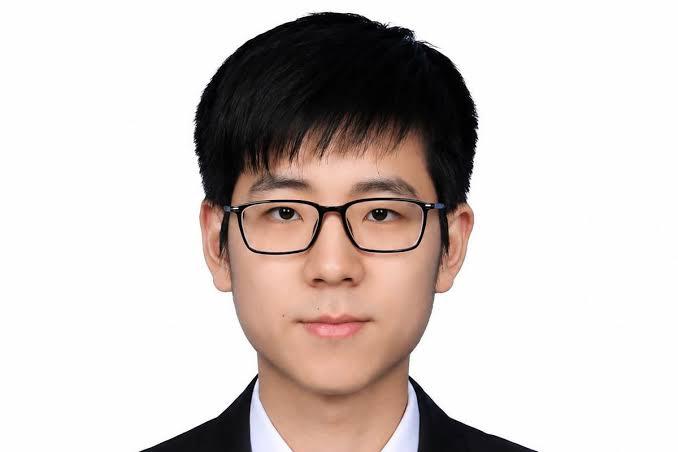
At the age of 25, Qin Shentao has emerged as one of China’s young AI entrepreneurs attracting attention after the company he founded raised more than 500 million yuan, equivalent to approximately VND 1.9 trillion, in just five months of operation. Notably, when he began building the business, he was still pursuing his doctoral studies at Tsinghua University, one of China’s leading institutions for technology education and research.
Born in 2001 in Shanxi Province, Qin Shentao developed an early interest in mechatronics, robotics and artificial intelligence. In 2023, he graduated with a degree in mechatronics from Harbin Institute of Technology, an institution renowned for its strengths in engineering education and technological research. During his undergraduate studies, he received several honors and scholarships, including the May Fourth Medal for Youth, the President’s Medal and a National Scholarship.
Beyond his academic pursuits, Qin Shentao also actively participated in robotics and artificial intelligence competitions. Together with his teammates, he won top prizes in several national-level technology competitions, ranging from collaborative robotics to innovation contests for university students. These experiences gave him opportunities to tackle practical engineering problems while building his knowledge of how hardware, algorithms and control systems can be integrated.
After graduating, Qin continued his doctoral studies in artificial intelligence at Tsinghua University, focusing on embodied intelligence, autonomous vehicles and reinforcement learning. According to the academic profile cited by the original source, he was also selected to participate in the Future Scholar PhD Programme, which is designed for promising young researchers.
In 2025, while continuing his research, Qin decided to establish OriginFlow, a startup focused on embodied intelligence and human-machine interaction technologies. Rather than developing mainstream AI applications such as chatbots or content-generation tools, the company chose to tackle a more challenging problem: how to enable robots to learn human actions and perform them in real-world environments.
According to NextFin News, OriginFlow completed multiple funding rounds in quick succession, raising a total of more than 500 million yuan in approximately five months of operation. This fundraising achievement has drawn attention to the young doctoral researcher’s startup at a time when Chinese investors are seeking technologies capable of bringing AI out of the digital world and into manufacturing and everyday life.
One notable aspect of OriginFlow’s development strategy is its NeuroScale data-collection technology, which the company describes as a solution that helps robots learn human actions through muscle activity signals. This approach differs from systems that primarily rely on cameras to capture images and movements during robot training.
Specifically, NeuroScale uses surface electromyography (sEMG) sensors to record the electrical signals generated by human muscle activity. The data is then processed using AI algorithms to help analyze movements, hand gestures and information related to applied force. According to OriginFlow, this method can provide additional data that cameras may struggle to capture fully, particularly when a hand or an object is obscured from view.
For service and industrial robots, the ability to learn tasks from humans is an important requirement for expanding their range of applications. Tasks that may appear simple, such as grasping objects, arranging items or performing activities in a kitchen, actually require complex coordination between sensors, motion control and environmental perception.
By collecting additional signals from muscles, OriginFlow hopes to build a dataset for robot training, enabling systems to better understand how humans perform individual actions. However, the technology’s practical effectiveness still needs to be assessed through independent testing, particularly when moving from research settings to diverse operating environments.
Another factor emphasized by the startup is the cost of data collection. According to the company’s introductory materials, each NeuroScale device costs approximately 1,000 yuan, a price point that the company expects will facilitate large-scale deployment. If hardware costs can be effectively controlled, the company could expand data collection to include more participants, thereby building a richer dataset for future robot development.
OriginFlow currently targets two main application areas: industrial manufacturing and domestic services. The company is working with partners to capture real-world task data from activities such as cleaning, organizing household items and cooking, with the aim of building a database of robotic skills for future applications.

Having Raised More Than VND 1.9 Trillion, Young AI Startup Faces the Challenge of Commercialization
OriginFlow’s ability to raise more than 500 million yuan just five months after its founding highlights investor interest in the field of embodied intelligence. However, the amount raised does not equate to revenue or profit. Instead, it provides the company with financial resources to continue research, recruit staff and develop its technology.
In recent years, embodied artificial intelligence (embodied AI) has become a notable research area in China. Unlike AI models that primarily process text, images or data in digital environments, embodied AI aims to combine perception, reasoning and control so that machines can interact with the physical world.
Many leading universities, including Tsinghua University, Peking University and Zhejiang University, are promoting research activities related to robotics and artificial intelligence. At the same time, the emergence of startups founded by university students and doctoral researchers reflects an increasingly clear connection between academic research and the demand for applied technology development.
For OriginFlow, its initial advantages stem from the founding team’s technical expertise and its focus on robot training data. However, to develop into a business with sustainable commercial operations, the startup must demonstrate that its technology can be applied effectively in real-world conditions, meet customer requirements and support a viable revenue model.
Beyond industrial robots and domestic service robots, methods for collecting movement-related signals, such as surface electromyography (sEMG), also hold research potential in areas including smart devices, rehabilitation assistance and human-machine interaction. Nevertheless, expansion into these applications will depend on research outcomes, technical requirements and suitability for each field.
From a student who once participated in robotics competitions to a doctoral researcher founding a technology company, Qin Shentao has chosen to apply his academic knowledge to a business venture that still faces considerable challenges. The more than VND 1.9 trillion raised in its early stages gives OriginFlow additional resources for development, but its long-term success will depend on its ability to turn research technology into products with practical value.
The story of the 25-year-old founder also highlights a trend in AI entrepreneurship: advanced university research can serve as the foundation for new businesses, particularly when it addresses technological needs that the market is actively seeking.
(Source: Tap chi Kinh te chung khoan Viet Nam)