

Nearly two years after the implementation of Resolution No. 57-NQ/TW, Vietnam has recorded notable achievements in institutional reform, digital infrastructure development, scientific research and innovation.
Nearly two years after the implementation of Politburo Resolution No. 57-NQ/TW on breakthroughs in the development of science and technology, innovation and national digital transformation, Vietnam has achieved a number of important results. The institutional framework has gradually been improved, investment resources have increased significantly, digital infrastructure has developed, and research and innovation capabilities have continued to improve.
Notably, a number of technology products researched and developed by domestic enterprises and organizations have entered production and reached both domestic and international markets.
Increasing Resources and Improving the Institutional Framework for Science and Technology Development
Resolution No. 57-NQ/TW identifies the development of science and technology, innovation and national digital transformation as the foremost strategic breakthrough, providing the foundation and driving force for national development in the new period. Immediately after the Resolution was issued, leadership, direction and implementation efforts were carried out in a coordinated manner, from the central level to ministries, sectors and localities.
The Central Steering Committee for the Development of Science and Technology, Innovation and Digital Transformation has directly guided implementation through regular and thematic meetings. The Politburo has issued several important conclusions on intellectual property, the exploitation, management and protection of low-altitude airspace, while also approving the project for developing the nuclear energy industry.
The National Assembly issued Resolution No. 193/2025/QH15 on piloting a number of special mechanisms and policies to create breakthroughs in the development of science and technology, innovation and national digital transformation. It also passed 11 laws drafted under the lead of the Ministry of Science and Technology.
The Government issued an Action Program to implement Resolution No. 57-NQ/TW and continued to amend and supplement it to meet practical requirements. The Prime Minister also issued Directive No. 29/CT-TTg dated July 16, 2026, on accelerating the implementation of science and technology, innovation and digital transformation tasks in 2026. In addition, the Prime Minister issued the Lists of Strategic Technologies and Strategic Technology Products and approved the National Strategy on Artificial Intelligence through 2030, with a vision to 2045.
In its capacity as the state management agency, the Ministry of Science and Technology took the lead in drafting and submitting to competent authorities for promulgation, or issuing within its authority, 195 legal normative documents. The Ministry also advised on and organized a 100-day intensive campaign to address bottlenecks in digital transformation.
Alongside institutional improvements, investment resources for this sector have increased significantly. Before Resolution 57 was issued, the state budget allocated approximately VND 12 trillion annually to science and technology. Following its issuance, funding for science and technology, innovation and digital transformation increased to VND 75 trillion in 2025 and VND 95 trillion in 2026. The allocation is expected to reach VND 120 trillion in 2027.
Improving Innovation Rankings and Accelerating Digital Infrastructure Development
Progress in science, technology and innovation development is reflected in international rankings. According to the World Intellectual Property Organization (WIPO), Vietnam ranked 43rd out of 139 economies in the 2026 Global Innovation Index (GII), up one place from 2025, ranking third in ASEAN and second among lower-middle-income economies.
Notably, Vietnam ranked 35th globally in innovation outputs, improving by two places compared with the previous year. Vietnam led the world in the share of high-tech exports and the production of creative goods. Its startup ecosystem ranked 50th globally, up five places from 2025.
In artificial intelligence (AI), Vietnam ranked 45th out of 195 countries and territories in the Government AI Readiness Index in 2025, up six places from 2024. According to the 2025 Global AI Index, Vietnam ranked 40th out of 93 countries, climbing 18 places. Vietnam also received the Government Leadership Award 2026 from the Global System for Mobile Communications Association (GSMA).
Telecommunications and Internet infrastructure have recorded clear progress, particularly in the deployment of 5G networks. The total amount of licensed frequency spectrum allocated to telecommunications enterprises nearly doubled compared with the period before 2024, rising from 340 MHz to 640 MHz. Between 2024 and 2026, six successful spectrum auctions were held, generating approximately VND 20 trillion in payments to the state budget.
According to data from US-based Ookla, Vietnam's mobile Internet speed increased from 50.9 Mbps, ranking 58th globally in April 2024, to approximately 230 Mbps, ranking eighth globally in September 2026, a roughly 4.5-fold increase. Fixed broadband Internet speed reached 297.64 Mbps, placing Vietnam among the world's top 10 countries. Hanoi also ranked among the five cities with the fastest mobile network speeds worldwide.
By the end of the third quarter of 2026, the country had 60,034 5G base stations, with coverage reaching 93.4% of the population. The number of 5G subscribers reached 27.2 million in August 2026, nearly double the figure recorded in September 2025.
Expanding infrastructure in remote, mountainous and disadvantaged areas has also received attention. From 2021 through the end of the third quarter of 2026, telecommunications enterprises provided mobile coverage to 3,513 villages and hamlets that previously had no mobile signal. As of November 1, 2026, satellite Internet services had been activated at 196 locations without mobile coverage, including 154 villages and hamlets and 42 public institutions, providing additional connectivity in areas where terrestrial network infrastructure is difficult to deploy.
Research Capabilities Improve as Vietnamese Technology Products Gradually Reach the Market
Scientific research activities have continued to record positive developments. According to SCImago, Vietnam ranked 42nd globally in the number of scientific publications in 2025, up three places from 2024, ranking 12th in Asia and fifth in Southeast Asia. In the first 10 months of 2026, Vietnam recorded 26,107 scientific publications indexed in Scopus, exceeding the total number of publications for the whole of 2025.
Higher education institutions accounted for nine of the 10 Vietnamese organizations with the highest numbers of international publications. As of June 2026, 61 Vietnamese higher education institutions had been ranked by SCImago, an increase of 15 institutions compared with 2024.
In addition, the Ministry of Science and Technology approved programs to support outstanding doctoral candidates for the 2026–2030 period and outstanding basic research in the natural sciences for the 2026–2035 period.
International cooperation in scientific research has continued to expand. The International Centre for Research and Postgraduate Training in Mathematics and the International Centre for Physics, both under the Vietnam Academy of Science and Technology, have had their status as UNESCO Category 2 Centres renewed for the 2026–2034 period. In the field of radiation safety, an EU-funded cooperation project has established 41 online monitoring stations to monitor radiation and share early warning data across the region.

Notably, some research and technology development results have been translated into tangible products that are gradually reaching the market. In biotechnology, an African swine fever vaccine researched and manufactured in Vietnam has been exported. In October 2026, Vietnam fulfilled an order for 300,000 vaccine doses to the Philippines.
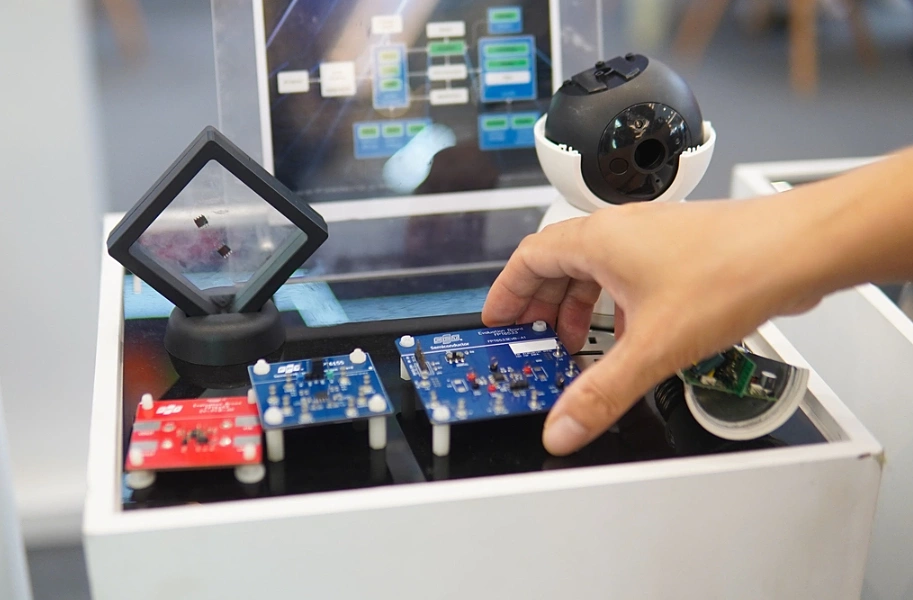
In the field of information security, the Government Cipher Committee, in cooperation with domestic enterprises, successfully developed a specialized security chip. In the application of nuclear technology, the Hanoi Irradiation Center was certified by the Animal and Plant Health Inspection Service under the US Department of Agriculture as meeting the technical requirements for treating fresh fruit for export. This is the third facility in Vietnam to receive such certification, enabling quarantine treatment in northern Vietnam for lychees exported to the United States.
Digital Technology Industry Grows as Digital Transformation Delivers Tangible Results
The digital technology industry has continued to be one of the sectors with high growth rates. In 2025, the industry's total revenue reached USD 215 billion, while exports amounted to USD 172 billion, up 36% and 30%, respectively, compared with 2024.
In the first 10 months of 2026, total industry revenue was estimated at USD 254.6 billion, while exports were estimated at USD 212 billion, representing respective increases of 53% and 46.2% compared with the same period last year.
As part of national digital transformation, shared digital platforms, databases and online public services have continued to be developed. The National Digital Architecture Framework was issued, providing a basis for ministries, sectors and localities to design information systems that ensure connectivity and data reuse.
As of September 30, 2026, 37 of the 79 national shared digital platforms were operational, while 12 were undergoing testing. The National Public Service Portal provided 3,745 online administrative procedures, including 2,361 fully online procedures. By October 2026, approximately 36.16 million digital signature certificates had been issued nationwide, an increase of 36.71% compared with the end of 2025.
One notable development is the integration of AI into public administration activities. Two national-scale AI platforms supporting public officials, featuring Vietnamese large language models developed and controlled by Vietnamese enterprises, are being provided free of charge during their pilot phase across all 24 out of 24 ministries and central-level agencies and all 34 out of 34 localities.
These platforms support legal research with references, as well as document drafting, summarization, comparison and review. As of November 2, 2026, approximately 761,000 accounts had been created.

across multiple areas. Illustrative photo.
Alongside the development of digital infrastructure and platforms, science, technology and innovation policies are gradually shifting towards addressing practical challenges, with a focus on tangible outputs. The Prime Minister identified 20 major challenges and assigned 10 ministries, sectors and agencies to take the lead in addressing them, while approving the Project on Restructuring National Science, Technology and Innovation Programs for the 2026–2035 period. As of November 3, 2026, 18 strategic technology tasks had been approved.
Intellectual property protection activities have also recorded positive results. In 2025, the relevant authorities processed 251,676 applications and granted 83,385 protection titles. The number of patent applications filed by Vietnamese organizations and individuals increased by 36%, while the number of patents granted rose by 134.2% compared with 2024.
In the first 10 months of 2026, the relevant authorities processed 182,415 applications and granted 76,804 industrial property protection titles.
These results demonstrate that the implementation of Resolution No. 57-NQ/TW has brought about progress across multiple areas, from institutional improvements and resource mobilization to infrastructure development, enhanced research capabilities and the promotion of technology applications.
In particular, science and technology, innovation and digital transformation are becoming increasingly closely integrated with production and business activities, state management and everyday social life. This provides an important foundation for Vietnam to improve productivity and competitiveness, towards the goal of rapid and sustainable development in the new period.
(Source: VTV Online)