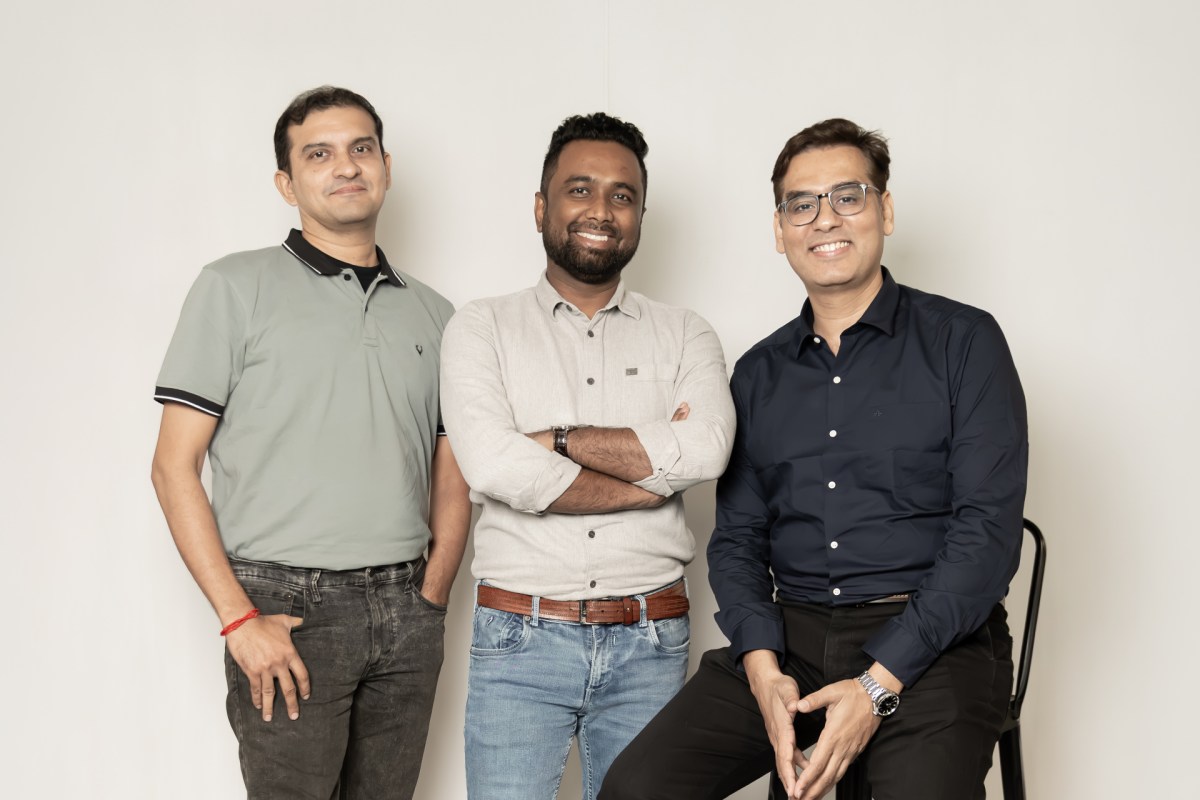


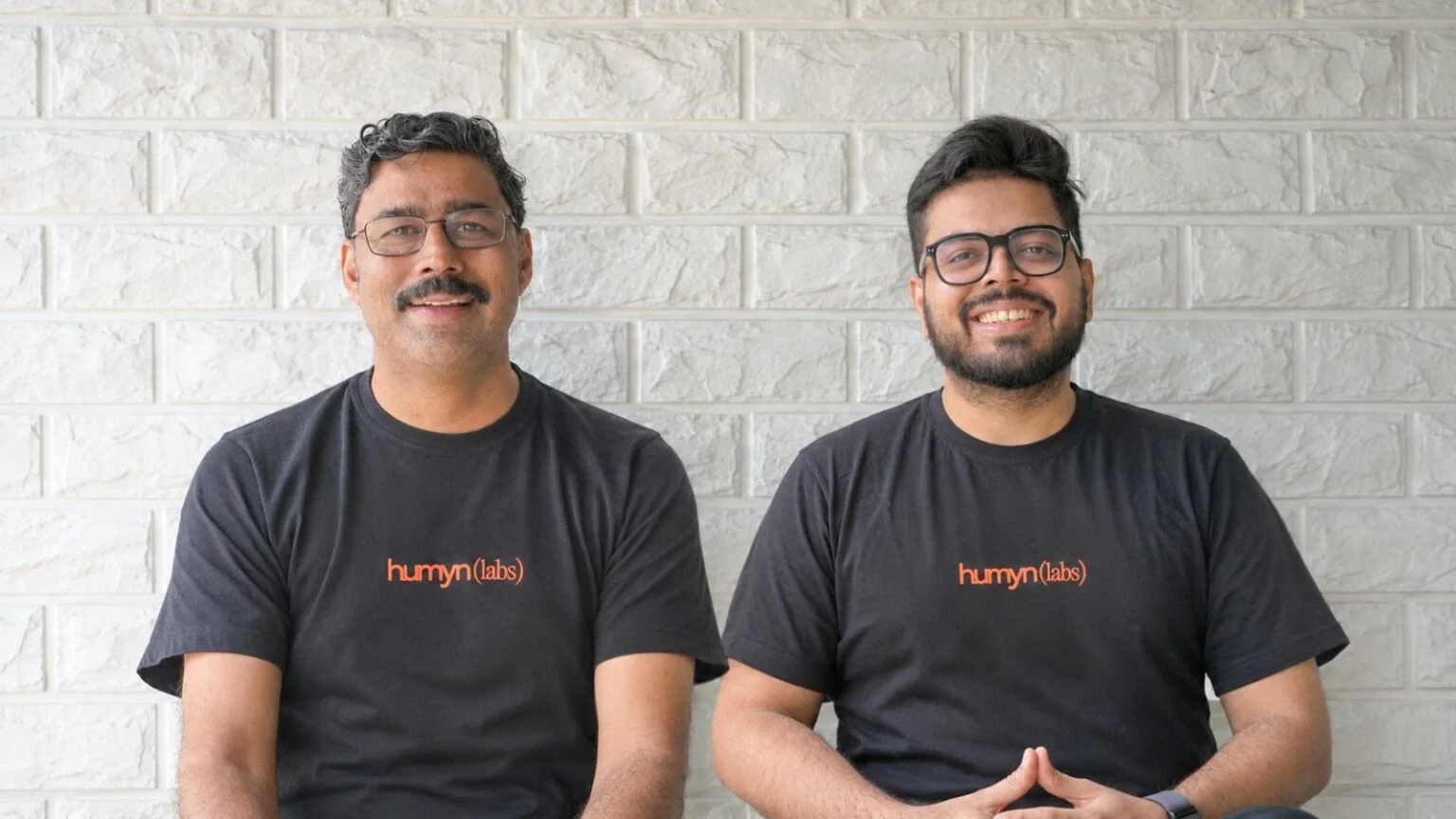
According to co-founder Manish Agarwal, Humyn's customers include advanced AI research labs, humanoid robotics developers and companies building world models, primarily in the US, UK and Europe.
Humyn is supplying a type of data that almost every robotics company needs, but very few have sufficient access to.
Large language models (LLMs) can draw on vast repositories of internet data, accessing trillions of words in relatively complete sentences without having to pay directly for each piece of content. Robots, by contrast, have no equivalent data source from which to learn how to perform physical tasks.
There is currently no internet-scale dataset that comprehensively records how people fold clothes, strip electrical wires, scramble eggs or sort components on a production line. More importantly, most videos currently available online are filmed from unsuitable angles and lack information about spatial depth, hand positions and the movements of the people performing the tasks.
"Robots don't learn their trade from the internet. They learn from people who have been doing that job for 20 years, right where the work is actually performed," co-founder Ishank Gupta said in a statement.
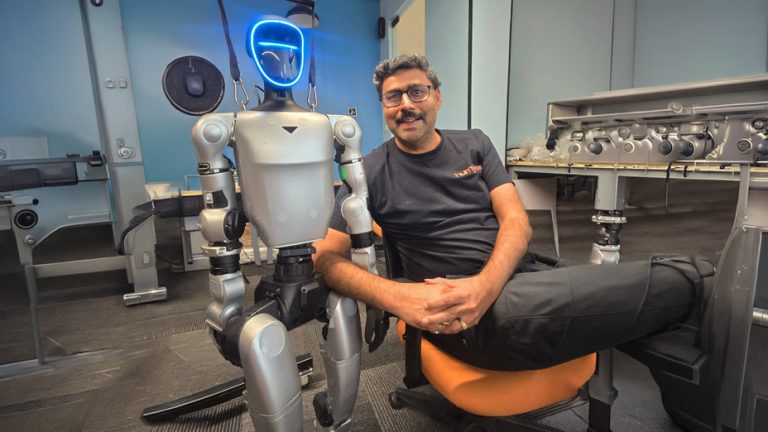
at the very locations previously used to collect data. Image: Humyn Labs.
To collect data, Humyn equips workers with compact head-mounted cameras at factories, warehouses, farms and households across more than 20 countries, including India, Bangladesh and South Korea.
The company's in-house recording device, called egoS1, uses a dual-camera system with global shutters and a field of view exceeding 130 degrees to ensure that workers' hands remain within the frame. It also features camera and motion sensor synchronization with microsecond-level precision.
Each recording is then screened and enriched with data on depth, three-dimensional head movement, the positions of 21 hand keypoints and step-by-step descriptions of the tasks being performed. All data is standardized so that research labs can use it almost immediately in robot training.
The new funding round comprises $26 million in equity led by Accel and $21 million in venture debt led by Lighthouse Canton, with participation from Trifecta Capital.
Other equity investors include Prosus Ventures, BeeGlobal, Finserv Intelligence through Bajaj Finance, Bajaj Alts AI Opportunities Fund, Dallas Venture Capital, Lighthouse Canton, Jump Trading and individual investor Anita Pramoda, former chief financial officer of Epic.
The new funding is expected to help Humyn expand its operations beyond its role as a data provider.
The company plans to invest in building infrastructure for testing robots and preparing them for deployment in real-world environments in Brazil, South Korea and India. It will also continue developing its recording devices and data processing systems, while expanding its teams in San Francisco, London and Seoul.
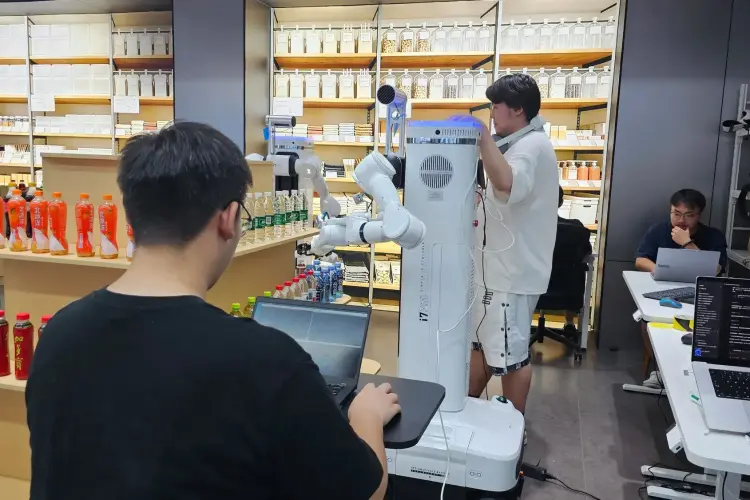
Under its plan, Humyn will work with AI model research labs and manufacturing facility operators to deploy robots at the very locations previously used to collect data.
At these sites, robots' work performance will be compared with that of humans, with limitations documented and fed back into the training process to further improve the models.
However, the physical AI data market is becoming increasingly competitive. Objectways, Micro1, TaskUs and several other companies are all developing systems to collect and process first-person human data.
Some robot manufacturers even argue that demand for this type of data could be far lower than expected. A co-founder of Rhoda AI previously stated that the company's robots could learn a new task with just around 8–10 hours of training data.
Nevertheless, Agarwal continues to set ambitious growth targets.
"With a $10 billion data infrastructure market opportunity taking shape, we aim to build a business generating $1 billion in annual revenue and become one of the global leaders in this field," he said.
Below is the content of the interview between Forbes and Humyn.
Turning Human Skills into Robot Training Data
John Koetsier: How does Humyn capture human skills and convert them into robot training data?
Manish Agarwal: We record real workers performing their everyday jobs, from the perspective of the person performing the task, in factories, workshops, farms and households. There are no actors and no pre-scripted scenarios.
Each recording goes through three stages:
-
Quality control: Automated systems remove videos that are blurry, poorly lit, frozen, obstructed or fail to capture actual hand-object interactions.
-
Data annotation: Information is added on depth, three-dimensional head movement, the positions of 21 hand keypoints and step-by-step descriptions of the tasks being performed.
-
Standardization and delivery: Data is time-synchronized and converted into suitable formats so that research labs can use it directly to train models.
Raw video alone is not enough. To learn a task from video, a robot needs to know where the hands are, how the worker's head moves and what each action is intended to accomplish.
John Koetsier: What is Humyn's recording device like, and what information can it measure?
Manish Agarwal: It is a compact head-mounted camera designed to allow workers to perform their jobs so naturally that they almost forget they are wearing the device.
We use a single-camera system for large-scale data collection and a dual-camera system combined with motion sensors when higher precision is required. Our internally developed Humyn egoS1 device is designed to address common limitations of head-mounted recording systems, including:
-
Camera and inertial measurement unit (IMU) synchronization with microsecond-level precision, allowing the effects of head movement to be accounted for on a frame-by-frame basis.
-
Dual 1080p cameras recording at 30 frames per second with global shutters, helping prevent image distortion during movement.
-
A field of view exceeding 130 degrees, ensuring that the worker's hands remain within the frame.
-
Dual cameras and inertial sensors mounted on the same fixed circuit board, helping maintain calibration accuracy.
-
A thermal management design that supports continuous recording at 30 frames per second throughout use.
The device captures wide-angle video from the worker's first-person perspective, depth data with real-world measurements, head movement aggregated from multiple sensors, and three-dimensional movements of the hands and fingers. Each camera is recalibrated monthly and whenever it is deployed at a new location.
Why Video and Simulation Environments Are Not Enough to Train Robots
John Koetsier: Why can't robots be trained using only video and simulation environments?
Manish Agarwal: Each approach addresses only part of the problem.
Internet videos are abundant, but they are often filmed from unsuitable perspectives and lack depth data, hand movements and motion measurements.
Simulation environments are highly effective for training robots to walk and navigate, but struggle to replicate complex materials and objects such as fabrics, cables, food or slippery surfaces. Moreover, simulations only cover scenarios that humans have deliberately built.
Teleoperation allows precise data collection, but the process is slow, expensive and largely limited to laboratory environments.
First-person human data can capture diversity and complex situations in real working environments at a scale that the other methods struggle to achieve. Most research labs combine all three approaches.
John Koetsier: Humyn has reached $50 million in annualized revenue after just six months of operation. Who are the company's customers?
Manish Agarwal: Our customers are advanced AI and robotics research labs developing Vision-Language-Action (VLA) models, world action models and world models.
Today, we provide data that helps AI understand human actions: real-world footage of people working, converted into machine-processable data that includes visual, tactile, motion and audio information.
Our data covers a wide range of people, tasks, environments and cultures across more than 20 countries, from households and factories to commercial facilities. Most of our customers are based in the US, UK and Europe.
We are moving towards testing robots in real deployment environments and measuring how frequently they fail, allowing research labs to identify model weaknesses before bringing their products to market.
We do not disclose our customers' identities at their request.
John Koetsier: How much human demonstration data does a robot need to master a new task?
Manish Agarwal: That depends on what the robot has already learned.
If it has undergone pre-training on sufficiently broad datasets, a robot may be able to learn a new, narrowly defined task from just a few carefully selected examples.
The most expensive part is building foundational capabilities, which requires enormous volumes of data covering a diverse range of people, locations and objects. Data diversity matters more than the total number of recording hours.
One thousand hours of data from a single kitchen may provide less training value than 100 hours of data collected from 50 different kitchens.
The Biggest Barrier to Humanoid Robots Is No Longer Hardware
John Koetsier: What is the biggest obstacle to deploying humanoid robots at scale?
Manish Agarwal: Reliability outside the laboratory.
A robot that succeeds in eight out of ten trials may deliver a very impressive demonstration, but it would be an ineffective employee if deployed in a real workplace.
The gap between these two environments lies in countless uncommon but difficult-to-handle situations: unusually shaped objects, poor lighting conditions, cluttered spaces, interrupted tasks or situations in which a robot must recover from its own mistakes.
This is primarily a data problem. Hardware is improving rapidly, and AI models already have considerable capabilities. What is still missing is real-world data covering difficult situations, along with methods for measuring how frequently robots fail when operating outside the laboratory.
That is precisely the feedback loop we are building: recording failure rates in real-world environments, monitoring them and feeding the results back into the training process.
(Source: Forbes Viet Nam)
Translated by StartupHaiPhong