


Photo: MetAI Technology.
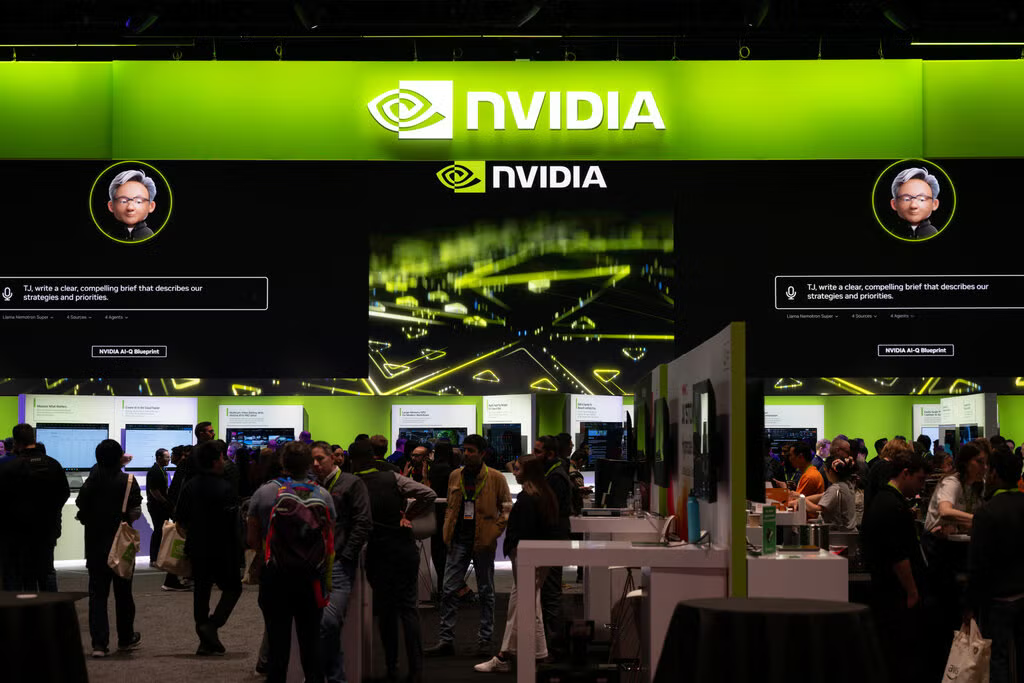
When Nvidia CEO Jensen Huang took the stage at the Computex technology exhibition in Taipei in May 2025, he emphasised that the era of industrial AI had begun. In this future, AI-trained robots will directly participate in operating high-tech factories.
Trillions of dollars are being poured into increasingly complex manufacturing facilities. As a result, ensuring that factories are built according to design specifications, on schedule and within budget has become an important challenge for manufacturers.
According to Huang, one technology that could address this challenge is the next generation of digital twins, which allow businesses to simulate entire manufacturing processes in a virtual environment before beginning construction of physical factories.
In a technology demonstration video shown at the event, Nvidia specifically mentioned a relatively little-known startup from Taiwan. That company was MetAI Technology.
For Daniel Yu, MetAI's co-founder and CEO, who was sitting in the audience watching the presentation, this was a memorable milestone.
"But being recognised by the public is one thing; successfully implementing the technology in real-world business operations is another," said the 36-year-old Yu in an online interview from his home in Taipei. "I am both excited and reminding myself that there is still a great deal of work to be done."
After four years in operation, MetAI has secured major customers, including Taiwan Semiconductor Manufacturing Co. (TSMC) and US-based Micron Technology. The startup was also included in Forbes Asia's list of 100 companies to watch in Asia in 2025.
TSMC, the world's largest contract chipmaker by market share, is using MetAI's software to create customised digital twins of piping systems and engineering infrastructure at its new factories in Taiwan and the United States.
Building a Factory Model in Just Five Minutes
Through its MetGen software, MetAI can convert large volumes of engineering drawings and equipment specifications into digital twins of factories.
These models reproduce in detail the layout of machinery, engineering systems and production areas based on actual design drawings. This allows businesses to inspect, adjust and finalise designs before construction begins.
Beyond supporting the design process, the virtual environment can also be used to train AI models that control intelligent robots.
Instead of having to bring robots into actual factories for testing, developers can allow them to practise different tasks in simulated environments with predefined operating conditions.
MetGen is compatible with Nvidia's Omniverse platform, which provides tools such as 3D rendering to help virtual factory models reproduce both the appearance and operations of real-world manufacturing facilities.
"By combining in-depth industry knowledge with the ability to automatically generate simulations, we can build virtual environments that would otherwise take people a great deal of time to complete," Yu said.
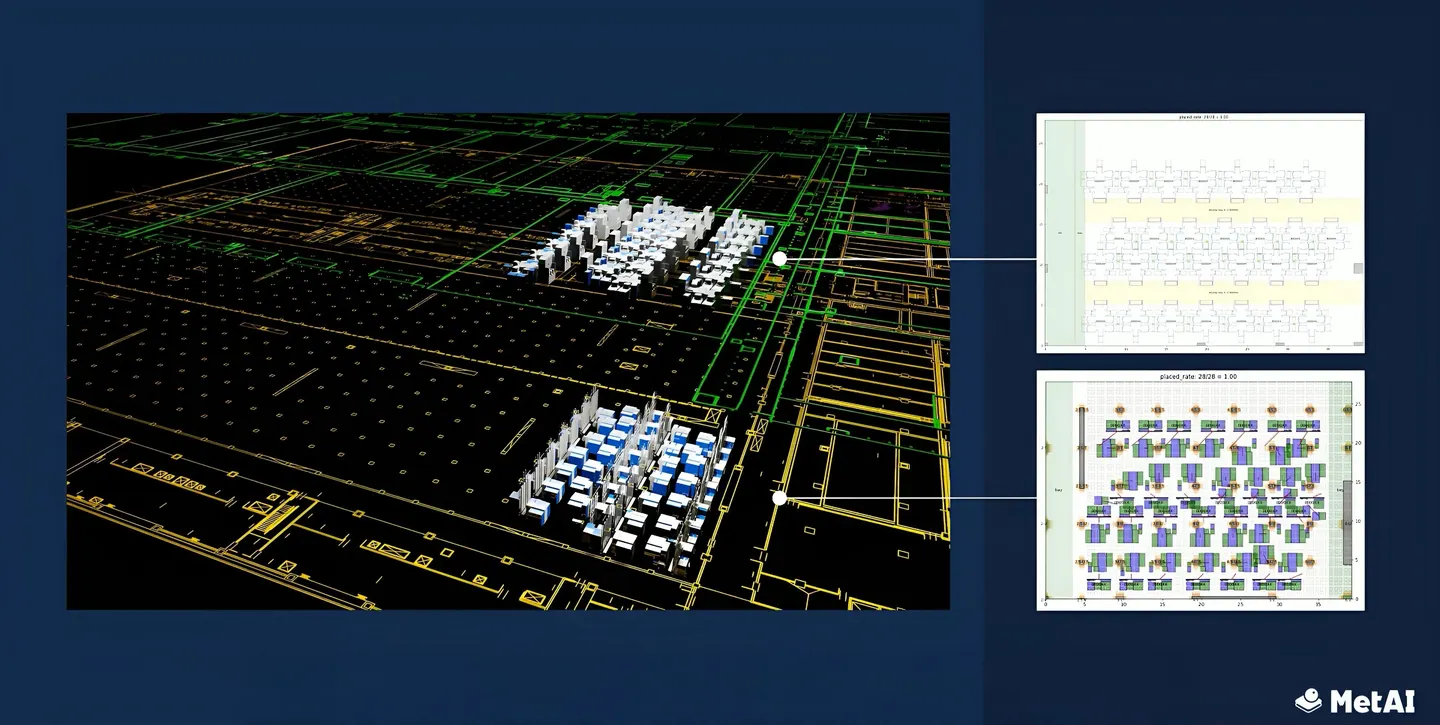
According to Yu, creating similar 3D models using traditional methods typically requires thousands of engineering hours.
MetAI claims that its software can generate a digital twin in less than five minutes. This capability is particularly valuable to the semiconductor industry, where rapidly growing demand for AI chips is driving manufacturers to expand production capacity.
An advanced semiconductor factory can cost more than $20 billion and take at least 19 months to complete, starting from the design stage. Given the scale of investment and technical complexity, design errors or changes arising during construction can result in significant losses.
According to a 2025 report by consulting firm PwC, semiconductor manufacturers worldwide are expected to invest more than $1.5 trillion in building new factories between 2024 and 2030.
Most of this investment is flowing towards the United States.
TSMC has committed $265 billion to expanding its operations in Arizona. According to Yu, the company is using MetAI's software for its factories there, although he declined to provide further details due to confidentiality agreements with customers.
In June, MetAI signed another contract with Micron Technology, the largest memory chip manufacturer in the United States by revenue, to build 3D layout models for factories as the company expands its global production capacity.
Ambitions to Expand into the AI Data Center Market
After establishing a foothold in the semiconductor industry, Yu has begun targeting another rapidly growing market: AI data centers.
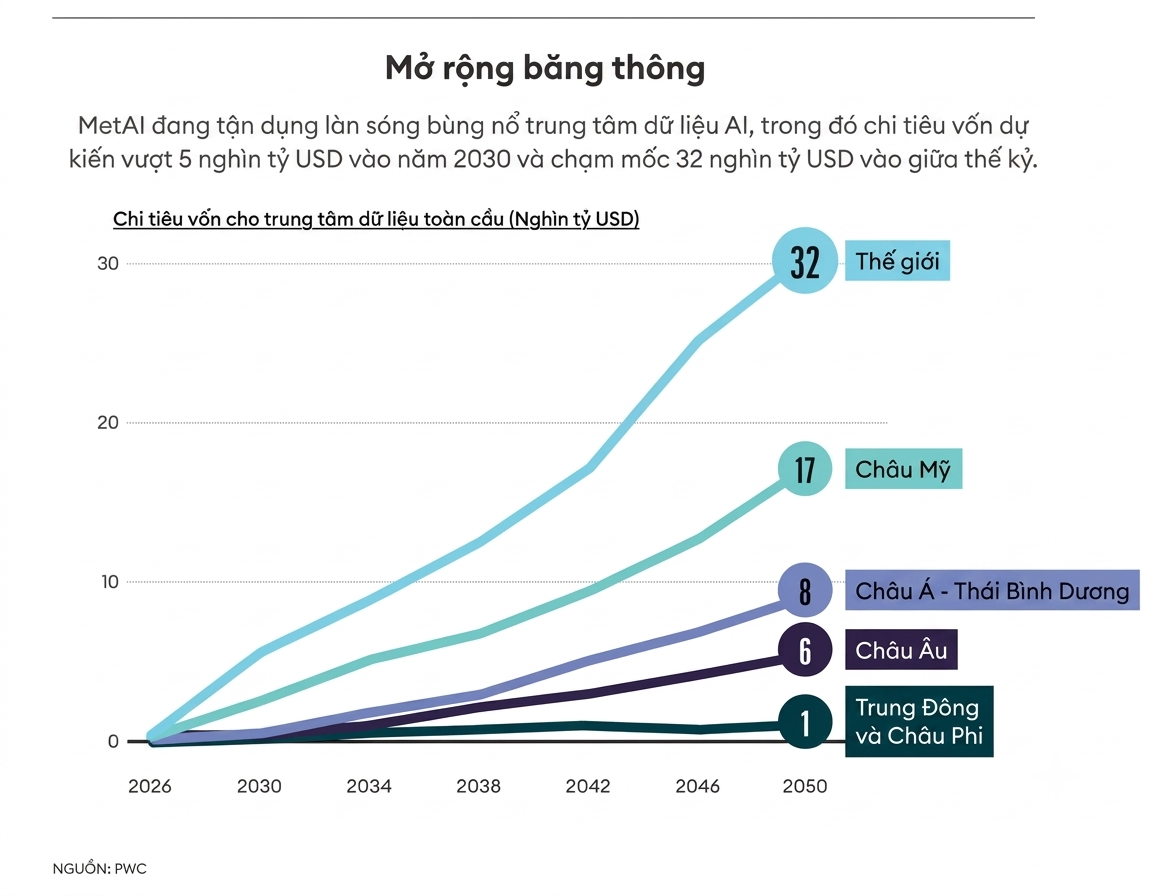
According to a September report by PwC, total global investment in AI data center infrastructure is expected to reach $5 trillion by 2030, with the Americas accounting for more than half.
"Semiconductor factories are a market where we can build up our experience because they are extremely complex," Yu explained. "But there are not many chip manufacturers in the world. AI data centers are the market that will allow us to scale."
In his view, investment in both sectors is so substantial that even a 1% improvement in efficiency could make a significant difference.
Recently, MetAI secured its first AI data center-related contract with Cooler Master, a Taipei-based supplier of liquid cooling systems for Nvidia.
Thomas Chen, CEO of Cooler Master, said the company is using MetAI's software to create digital twins of liquid cooling systems for two next-generation cloud computing service providers, commonly known as neoclouds.
As the new projects are still being implemented, Cooler Master has not yet been able to assess the actual cost savings. However, Chen said the software had significantly shortened the time required to revise designs.
Previously, whenever customers changed their requirements, engineers had to manually redraw piping systems and rearrange equipment. Now, they only need to adjust the input parameters and let MetAI's software quickly generate a new layout.
According to PwC's forecast, total global investment in AI data centers could exceed $5 trillion by 2030 and reach $32 trillion by the middle of this century.
Sarah Lee, senior research director for manufacturing IT strategy at research firm IDC, said digital twin technology is particularly useful for semiconductor factories and data centers.
"These are environments with very high densities of equipment and monitoring systems. The costs arising from downtime, inefficient operations or the need to modify designs can all be substantial," she explained in an email.
Where Does Its Competitive Advantage Lie?
Digital twins are not a new technology. Germany's Siemens and France's Dassault Systèmes have long been major players in industrial simulation.
However, Yu believes MetAI does not compete directly with these companies. In his view, Siemens' and Dassault Systèmes' platforms serve as foundational tools, handling tasks such as building 3D environments and simulating physical laws.
To make models behave realistically, engineering teams still have to carry out numerous complex steps: identifying individual objects, assigning physical properties such as mass, friction, light reflectivity and surface texture, and then programming abnormal scenarios such as equipment failures.
MetAI aims to automate this work. Its software can automatically identify and attach the necessary data to models. The resulting files can then be imported into Nvidia Omniverse to run simulation scenarios.
Yu also believes that what sets MetAI apart from other digital twin startups is its expertise in semiconductor factories and data center facilities.
While many companies develop simulation technologies for various types of environments, MetAI focuses on addressing the specific technical requirements of two industries involving very large investments.
Yu describes this specialised industry knowledge as a "defensible competitive moat".
He did not disclose how much TSMC and Micron had saved by using MetAI's software.
Instead, he pointed out that a one-year delay in a chip factory project could cost a manufacturer up to $8 billion in revenue.
Project delays are not uncommon in the semiconductor industry.
In early 2025, TSMC CEO C.C. Wei said construction of the company's project in Arizona was behind schedule due to complex requirements involving regulatory compliance, permitting and labour shortages.
Also in 2025, Micron pushed back its plans to build two factories in Clay, a town in northern New York State, by another two to three years. According to publicly released information, labour shortages were among the contributing factors.
Yu believes it is now time for MetAI to expand internationally.
The company plans to open a sales office in the United States in early 2027 to reach more customers in the semiconductor and data center industries, while continuing to maintain its research and development operations in Taiwan.
To secure the resources needed to carry out this plan, MetAI is raising $25 million in a Series A funding round, Yu said. He did not disclose the company's valuation. The round is expected to close before the end of 2026, with Cooler Master among the investors.
Previously, in January 2025, MetAI successfully raised $4 million in a seed funding round. The deal marked Nvidia's first investment in a startup from Taiwan.
Other local investors include Kenmec Mechanical Engineering, a company specialising in factory automation, and Solomon Technology, a developer of 3D vision systems for industrial robots. Both are Nvidia partners.
Edgar Chiu, co-founder and managing general partner of SparkLabs Taiwan, one of MetAI's early investors, believes the startup's strength lies in its ability to rapidly create digital twins that meet the specific technical requirements of individual customers.
In the semiconductor industry, these requirements may include regulations governing the distances between equipment inside factories.
"We really haven't seen another company that can meet customer requirements this closely," Chiu said.
MetAI does not disclose its revenue figures. However, Yu said approximately 70% of its current sales come from contracts with contract chip manufacturers. The remainder comes from suppliers of equipment for AI data centers and customers in the warehousing sector, such as Kenmec.
The company charges on a project-by-project basis rather than applying a fixed fee to all customers.
According to Yu, MetAI is targeting break-even in December 2026. He forecasts that revenue in 2027 could increase by 500–600% year on year, driven by a growing number of potential contracts. Nevertheless, MetAI's current customer base remains relatively small.
"I can count my customers on two hands," Yu said. Rather than pursuing customer numbers, he prioritises large clients that can play a pioneering role in adopting the technology and help MetAI continue improving its products.
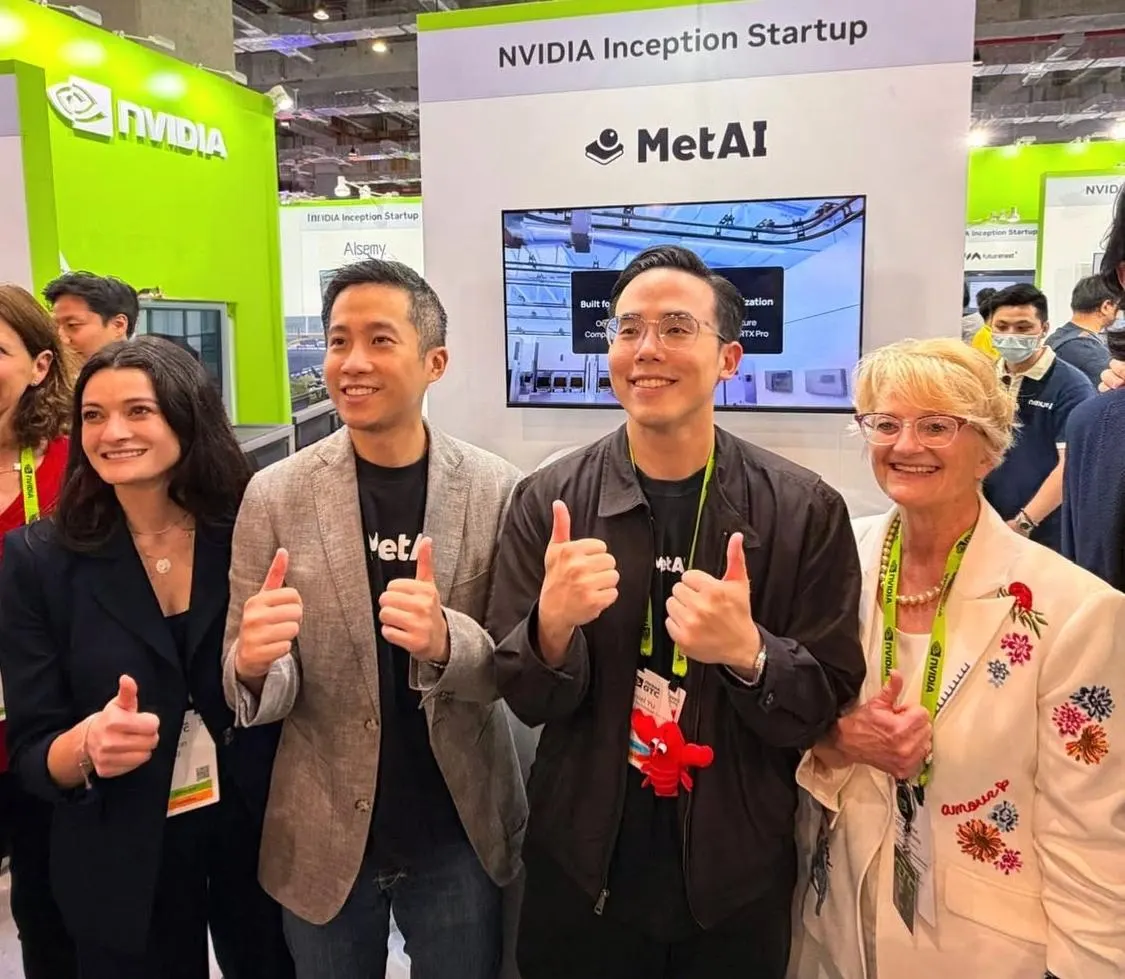
Dave Liu, MetAI's chairman and chief operating officer; Daniel Yu, MetAI's CEO; and Lori Huang,
Jensen Huang's wife, at Nvidia GTC Taipei in June. Photo: MetAI.
A Founder with a Background in Finance
Daniel Yu's path into AI did not begin in the technology industry.
After earning a bachelor's degree in finance from National Taiwan University in 2013, his first job was as a banker at DBS in Taipei. Yu later moved to Shanghai, where he worked as an equity trader at the Shanghai office of hedge fund manager UG Investment Advisers.
Having been passionate about video games since childhood, Yu had always wanted to try his hand at the technology industry.
In 2016, he joined Cameo, a virtual reality company headquartered in Taipei. There, Yu helped build an immersive theatre at Taiwan's National Palace Museum.
In 2019, he left Cameo to take up the position of chief financial officer at TokenBacon, a local blockchain company. However, less than a year later, TokenBacon ceased operations and Yu returned to Cameo. That failure taught him an important lesson.
"That experience further reinforced something I always keep in mind when running MetAI: having good technology alone is not enough to build a successful business," Yu reflected. "It is equally important to identify genuine market needs and develop a customer acquisition strategy that can be repeatedly implemented as the business scales."
The idea for MetAI began to take shape in 2022, when Yu was serving as deputy general manager at Cleantek, his family's business specialising in semiconductor materials recycling.
At the time, following ChatGPT's launch, many manufacturers began looking for ways to apply general-purpose AI models to industrial operations.
However, Yu realised that these models lacked the specialised knowledge needed to handle complex manufacturing processes.
Around the same time, Renton Hsu, a data science specialist and 3D engineer whom Yu had met while working at Cameo, approached him with the idea of using AI to accelerate the development of industrial simulation models.
In 2023, the two founded MetAI. Hsu, now 38, took on the role of chief technology officer. A year later, Dave Liu, now 40, joined as a co-founder, chairman and chief operating officer.
"When ChatGPT emerged in late 2022, people thought AI could optimise virtually every industrial process as if by magic," Yu recalled.
"But looking back, it is clear that this cannot happen unless AI models are equipped with in-depth knowledge of individual fields. We founded MetAI to bridge the gap between AI's potential and its practical application in industry."
How the Partnerships with Nvidia and TSMC Began
MetAI's first project originated from a startup accelerator programme organised by Wistron, a major Taiwanese electronics manufacturing group.
As part of the project, MetAI generated synthetic data for Wistron to train AI models to detect defects on printed circuit board production lines.
In 2023, MetAI joined Nvidia Inception, the US chipmaker's startup support programme. Nvidia subsequently introduced MetAI to Kenmec, a company seeking a solution to build digital twins for smart warehouses.
A year later, Nvidia connected the startup with TSMC, which was looking for technology to support the construction of new factories in the United States, according to Yu.
The MetAI team flew to Arizona to present its simulation solution directly to TSMC. Following the engagement process, the startup secured a contract with the semiconductor manufacturer in 2025.
This was an important step forward for MetAI, but it also exposed the company to demanding technical requirements.
"Working with a large company like TSMC, particularly one known for its very high standards, is not always easy," Yu admitted.
He recalled that at one point, the MetAI team had to spend three months solely verifying its algorithms to meet TSMC's requirements.
However, those efforts also became an investment in the company's next stage of development.
Yu now wants to turn the experience gained from projects with TSMC and Micron into a standard software platform that can be deployed at any advanced semiconductor factory, regardless of the type of chip being manufactured.
MetAI expects to complete a trial version for a selected group of customers in the fourth quarter of 2026, before introducing a version for AI data centers in early 2027.
"If we can achieve that, these markets will not only be optimised through our products. In the long run, those products could also help shape how these markets operate," Yu said.
(Source: Forbes Viet Nam)
Translated by StartupHaiPhong