

For years, Jensen Huang has been a familiar face at startup events in Silicon Valley.
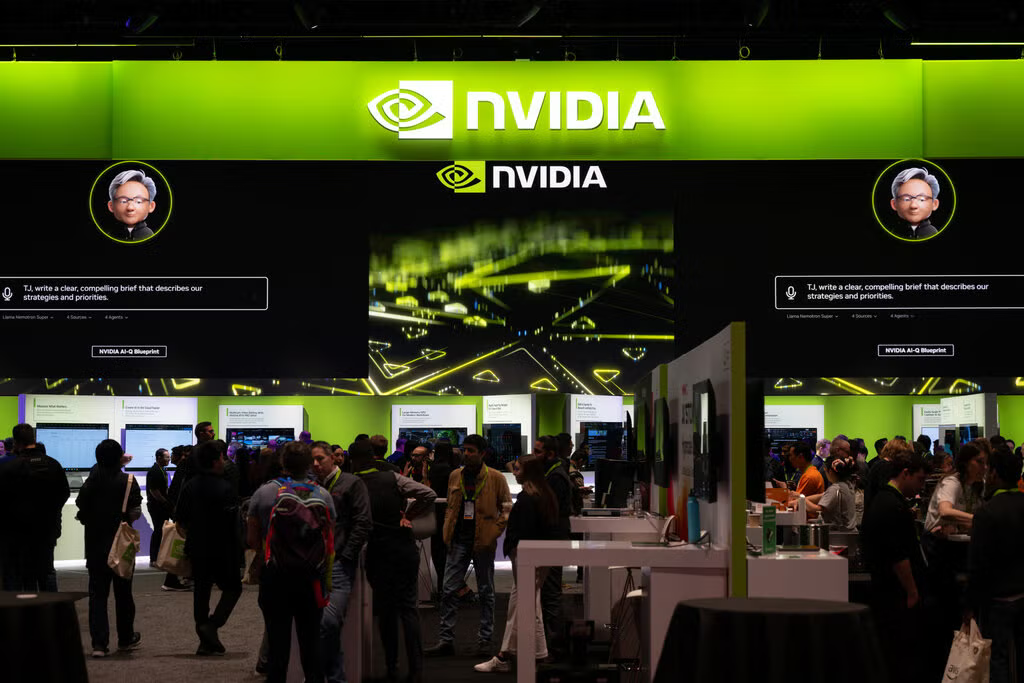
Photo: New York Times
The chipmaker has not only invested tens of billions of dollars in AI companies but has also helped them gain access to chips, computing capacity and funding. The leadership change at Nvidia is therefore raising concerns about the future of young technology companies.
For years, Jensen Huang has been a familiar face at startup events in Silicon Valley. He regularly met with founders, served as a judge at fundraising competitions and appeared at startup product demonstration days.
His presence was not simply a reflection of his position as one of the most successful business leaders in the technology industry. Jensen Huang also actively supported newly established companies in competing with major technology corporations through financial investment and the provision of computing capacity.
Therefore, news of his sudden departure from the position of Nvidia CEO is raising concerns among investors and startup founders about potential changes to one of the most important sources of support within the AI ecosystem.
NVIDIA – THE “CENTRAL BANK” OF THE AI INDUSTRY
Jensen Huang once emphasized that although the technology industry has many good ideas, no single company can own all the good ideas in the world. This perspective partly explains how Nvidia has become deeply involved in the startup ecosystem rather than focusing solely on selling chips to major customers.
According to securities filings, as of the end of July, Nvidia held equity stakes worth $48 billion in 229 private companies, including major investments in OpenAI and Anthropic. The company's startup investments more than doubled in just six months.
Tomasz Tunguz, an investor at Theory Ventures, a fund specializing in early-stage startups, likened Nvidia to the “central bank of AI” and Jensen Huang to the head of that bank. In his view, the sudden departure of Nvidia's CEO is comparable to the unexpected departure of the Chair of the US Federal Reserve (Fed).
As of the end of July, Nvidia held equity stakes worth $48 billion in 229 private companies, including major investments in OpenAI and Anthropic. The company's startup investments more than doubled in just six months.
However, Nvidia's influence on startups extends beyond direct investments. One of its more important forms of support is access to AI chips and cloud computing infrastructure.
For newly established companies, securing or renting enough chips to develop AI models is often a significant barrier. Financially powerful corporations such as Amazon, Google, Meta and Microsoft have a considerable advantage in accessing these resources.
Nvidia has supported startups and smaller cloud computing companies through lease guarantees and other forms of financial backing. According to securities filings, the total value of these guarantees and support commitments reached $165 billion.
In addition, Nvidia has its own venture capital arm and its Inception program, which provides training and guidance to tens of thousands of startups on how to access the chips and computing capacity needed to develop their products.
These activities have made Nvidia an important link in the formation and expansion of many AI companies, particularly those that lack the resources to build their own technology infrastructure.
STARTUPS WORRY ABOUT A SHRINKING SUPPLY OF FUNDING AND AI INFRASTRUCTURE
The leadership change at Nvidia is raising questions about whether the company will continue to maintain such a high level of support for smaller businesses.
Mike Volpi, an investor at Hanabi Capital, a fund that invests in AI companies, predicted that Nvidia could adopt a more cautious approach to providing financial backing for smaller cloud computing companies.
“I expect there will be some volatility and that some of Nvidia's capital will leave the market in the short term,” Mike Volpi said.
According to investors, if Nvidia scales back its financial commitments, companies that currently depend on these guarantees could face difficulties raising capital and maintaining their infrastructure expansion plans.
According to investors, if Nvidia scales back its financial commitments, companies that currently depend on these guarantees could face difficulties raising capital and maintaining their infrastructure expansion plans.
In particular, some smaller data center companies rely on revenue commitments from Nvidia to secure loans that they would otherwise struggle to obtain without such backing.
Dylan Patel, head of AI research firm SemiAnalysis, warned about the risks of this financing model at an event for software developers in San Francisco last month.
According to him, some data center companies that are struggling financially can still obtain revenue guarantees from Nvidia. This allows them to continue borrowing money to expand their operations, even though their financial strength and actual business prospects remain uncertain.
“This is a fairly risky proposition. We will have to wait and see what happens,” Patel warned.
These concerns are emerging against a backdrop of growing uncertainty in the AI market. Some investors worry that AI company valuations are being pushed too high, potentially creating a bubble. Meanwhile, the technology industry also faces the possibility of increased regulatory oversight and a slowdown in data center construction following the US midterm elections.
Nvidia currently controls most of the global market for computing chips used to develop and operate AI systems. As a result, any changes to the company's investment strategy, chip supply or financial support could have broader implications for businesses across the industry.
This dependence has also drawn increasing attention to concerns about the financial structure of the AI ecosystem. When a company supplies chips, invests in its customers and simultaneously provides financial backing to infrastructure providers serving those same customers, changes in the central company's policies can trigger a chain reaction.
BILLION-DOLLAR DEALS AND THE FUTURE OF THE STARTUP ECOSYSTEM
Jensen Huang's role in the startup ecosystem is also reflected in Nvidia's major technology acquisitions over the past year.
Last December, Nvidia spent approximately $20 billion to acquire technology and hire personnel from Groq, a chipmaking company. In September, the company went on to spend approximately $14 billion to acquire Hugging Face, an open-source AI platform.
These deals brought significant financial benefits to investors who had previously funded the startups acquired by Nvidia.
Joseph T. Hasselmann, an investor who had backed Groq, wrote on LinkedIn after the deal was announced: “Jensen Huang, we have never met you, but hats off to you!”
Beyond investing in and acquiring companies, Jensen Huang has also been one of the strongest advocates of open-source technology and open-weight AI models. This approach allows developers to access, use and modify AI technology components without having to build an entire system from scratch.
This is particularly significant for startups, as it can help them reduce research and product development costs and shorten the time needed to bring technology to market. Over the past year, Nvidia has also spent nearly $20 billion acquiring two companies focused on open-source technology.
According to Samantha Lau, a technology equity portfolio manager at investment firm AllianceBernstein, Jensen Huang's departure from Nvidia could lead to a reduction in an important source of funding for young companies, particularly data center operators preparing to go public through an initial public offering (IPO).
She also believes the change could dampen market optimism. “The god of circular financing models is going into hibernation,” she remarked, referring to the network of closely interconnected investment and financing agreements in the AI industry.
Meanwhile, Sujay Jaswa, a partner at venture capital firm Wndr, which had previously organized events featuring Jensen Huang, compared his departure from Nvidia to the passing of Steve Jobs, Apple's co-founder.
“This is a huge loss for all of us,” Jaswa said.
(Source: TechConnect | VnEconomy)
Translated by StartupHaiPhong