

Simplexity Robotics, a Chinese startup developing AI for robots operating in the real world, has raised $100 million in a funding round led by Ant Group, the company backed by Jack Ma. The investment represents a bet on Simplexity's ability to compete with more established players in China's rapidly growing robotics industry.
The pre-Series A round values Simplexity at $1.6 billion, with participation from existing investors including Tencent, HSG, and Lanchi Ventures, according to chairman and co-founder Wang Kai.
China's humanoid robotics industry has moved ahead of its U.S. counterparts, accounting for 97% of humanoid robots delivered worldwide in the first three quarters of 2026. Government support policies and a well-developed domestic supply chain have encouraged a wave of new companies to enter the market. China's economic planning agency recently warned of the risk of a bubble in the sector.
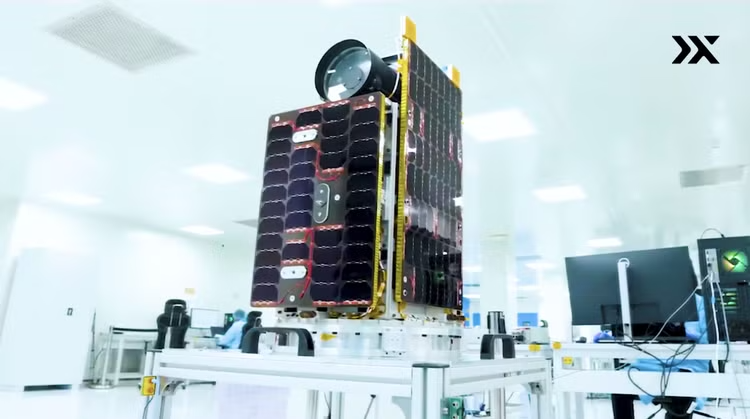
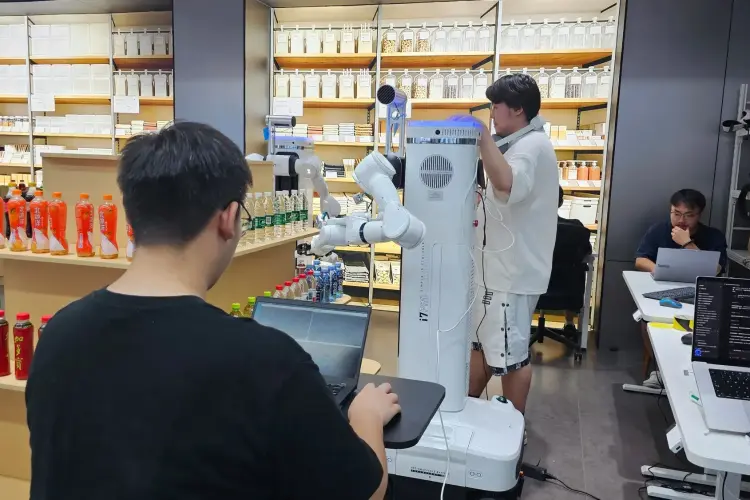
On Monday, Simplexity unveiled its second humanoid robot model, named iX. According to the company, the wheeled robot can prepare and serve drinks, retrieve and deliver objects, and provide guided tours. Its first customers include South Korean robotics startup Rlwrld, Tsinghua University, and forklift manufacturer Hangcha. Simplexity said it has worked with Hangcha to deploy a warehouse sorting line.
The latest investment adds Simplexity to Ant Group's robotics portfolio, alongside Unitree, Astribot, and Zeroth.
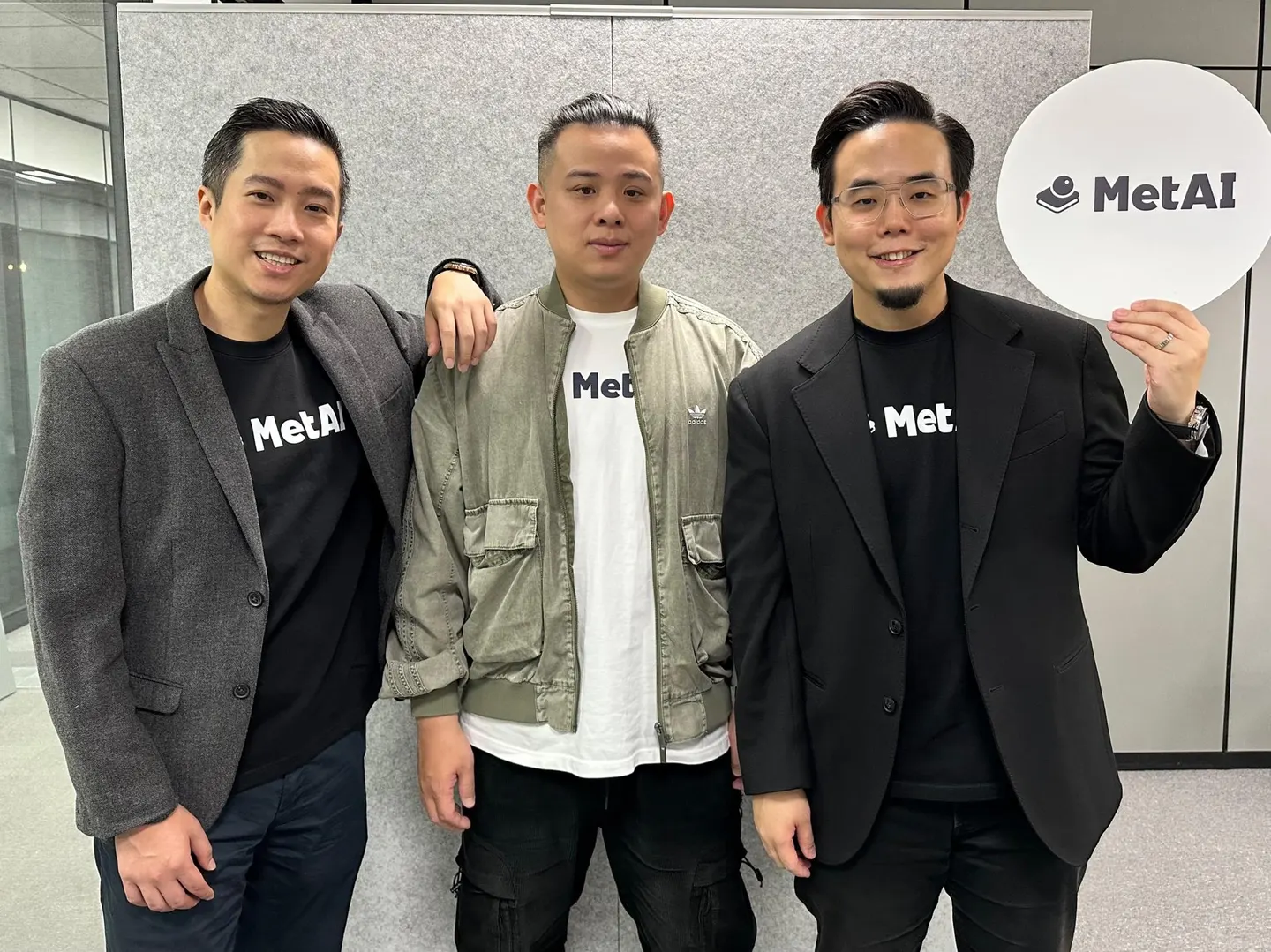
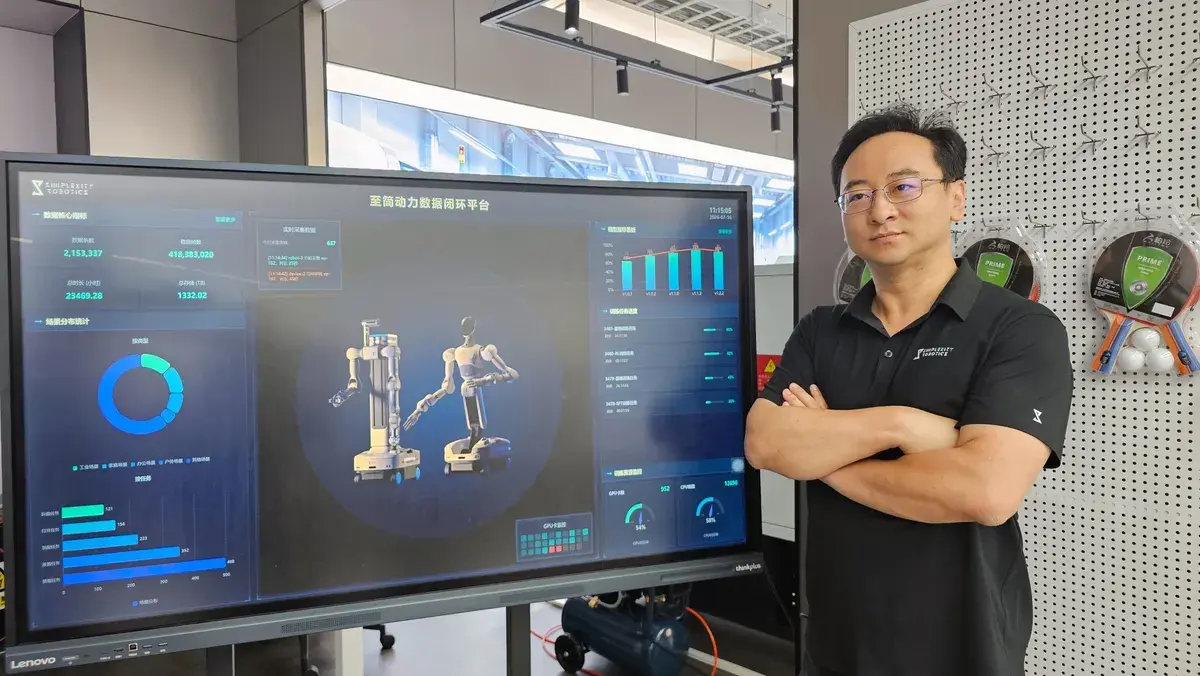
Wang founded Simplexity last summer with Jia Peng and Wang Jiajia. All three previously held leadership positions at electric vehicle manufacturer Li Auto. According to Wang, the company was valued at more than $1 billion just a few months after its founding.
“We combine foundation models, datasets, supply chains, and customers to drive the commercial application of robots,” Wang said in an interview at the company's campus in Mudu, a 2,500-year-old canal town on the western edge of Taihu Lake in Suzhou. Nearby, engineers watched robots place juice, carbonated soft drinks, and bottled water on shelves, while others adjusted algorithms on screens.
The company designs both hardware and software, tailoring them to individual tasks and robot configurations. Simplexity develops its entire software system in-house, including AI models that simulate the physical world, while also building real-world datasets to train them.
Against a backdrop of rising labor costs, declining birth rates, and a shrinking workforce in China, Wang believes robots could become an indispensable part of the world's second-largest economy. “Our robots are designed to take on jobs that people do not want to do,” he said.
Simplexity's first humanoid robot model, designed for industrial applications and mounted on a wheeled base, is already being used in manufacturing, goods sorting, retail, and pharmaceutical packaging. The company has trained its robots to operate CNC machines, precision machining equipment used to cut, drill, and shape metal, wood, and plastic, in an effort to address a severe shortage of machine operators.
According to Wang, China has 3 million CNC machines, and their operators have an average age of 45. He said that with an average annual salary of around $20,000, few young Chinese workers want to take on this job. “The working environment is noisy and physically demanding, and workers have to breathe in a lot of dust,” he said. “We want robots to take on jobs like these.”
Simplexity operates what it claims is the world's first intelligent robot-powered production line for Leaderdrive, using robots to control CNC machines. Leaderdrive is one of Simplexity's major customers and also an important supplier to U.S. robotics companies Tesla and Figure AI. The robots operate around the clock to manufacture precision motion-control components. Other customers include precision components manufacturer Suzhou Dongshan Precision Manufacturing and Hangcha.
Simplexity is also developing China's first modular humanoid robotic arm. Its joint modules can be configured independently, allowing the arm to be assembled, disassembled, and adjusted in length to suit different tasks.
Despite intense competition in the Chinese market, Wang sees this as an advantage. “If we can sell and survive here, we can achieve higher profit margins anywhere else in the world,” he said.
While OpenAI has created a breakthrough chatbot and Anthropic has developed leading AI coding agents, Wang said Simplexity wants to create a breakthrough application for embodied AI — AI capable of interacting with the physical world through robots. This is also an ambition shared by many other companies in China's robotics industry.
“There may be many knights, but there is only one King Arthur,” he said, comparing his company's ambitions to the legendary medieval king of England.
(Source: Bloomberg Businessweek Vietnam)
Translated by StartupHaiPhong